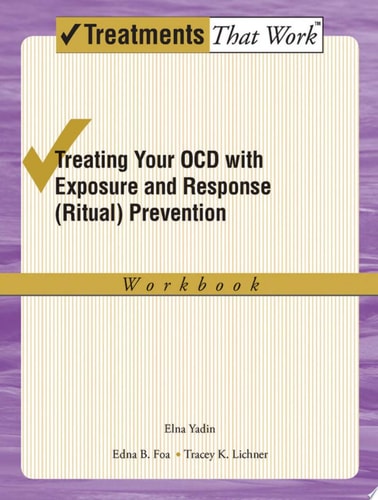
Treating Your OCD with Exposure and Ritual Prevention Therapy: Workbook
0
0
As an Amazon Associate and affiliate partner, Menrva Books earns from qualifying purchases. Learn more
Author Description
An estimated 2-3% of the population is affected by obsessive-compulsive disorder (OCD). This is a chronic condition that significantly affects daily functioning and quality of life. Many people with OCD would greatly benefit from receiving professional help to learn how to successfully manage this debilitating condition. This workbook aims to guide patients of obsessive-compulsive disorder (OCD) in how to best benefit from the treatment provided by their therapists. Treatments addressed in this publication include exposure and ritual (response) prevention, an effective, evidence-based treatment for this disorder.Designed to be used in conjunction with its companion therapist guide titled Exposure and Ritual (Response) Prevention for Obsessive Compulsive Disorder, this Workbook includes an exposure and ritual prevention treatment program which is broken down into 17 - 20 biweekly treatment sessions. During these sessions the patient will be gradually exposed to situations and places that trigger his or her OCD symptoms. The goal is that over time the OCD sufferer comes to realize that the things he or she fears will not necessarily occur if the rituals are not performed. Some exposures will be supervised by the therapist, but the workbook can help the patient to practice on their own at home in order to overcome some of the barriers and difficulties that are part and parcel of every treatment.
Menrva's Summary
THE THESIS
This workbook investigates how patients can effectively utilize Exposure and Ritual Prevention (ERP) therapy to manage and reduce the symptoms of obsessive-compulsive disorder. The authors, led by Edna B. Foa, a prominent researcher in the field of anxiety disorders, provide a structured, evidence-based framework designed to facilitate the patient's active participation in their own recovery process. By integrating clinical methodology with practical exercises, the text aims to bridge the gap between professional therapy sessions and daily life management.
THE SCOPE MAP
What You Will Find
- A structured 17-20 session treatment program for OCD management
- Practical exercises for conducting exposure and ritual prevention at home
- Evidence-based strategies for identifying and confronting OCD triggers
Scope Limits
- This text is designed as a companion to a therapist guide and is not intended to replace professional clinical supervision
- The content focuses specifically on ERP therapy rather than pharmacological or alternative treatment modalities
THE AUTHORITY PERSPECTIVE
Clinicians and mental health professionals frequently cite this workbook as a standard, evidence-based resource for patients undergoing cognitive-behavioral treatment. Readers often note the clinical density of the material, emphasizing that it is most effective when used in direct collaboration with a qualified therapist.
Page Count:
65
Publication Date:
2012-01-01
Publisher:
Oxford University Press
ISBN-10:
0190240709
ISBN-13:
9780190240707
Psychology
Self Help
Medical
Mental Health
Community Tags
Similar Books