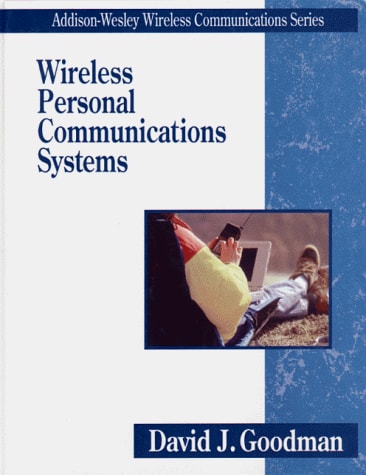
Wireless Personal Communications Systems
0
0
As an Amazon Associate and affiliate partner, Menrva Books earns from qualifying purchases. Learn more
Author Description
This book presents the technology and underlying principles of wireless communications systems. Written by a leading authority, it provides the perfect introduction for the professional or the student who has a basic understanding of telecommunications.Each system is described using a unified framework so the reader can easily compare and contrast the systems. More specifically, key features such as architecture, radio transmission, logical channels, messages, mobility management, security, power control, and handoff are addressed for each system. In addition, an analysis of such design goals as low price, wide geographical coverage, transmission quality, privacy, and spectrum efficiency helps the reader understand why the various systems have such divergent designs. Each chapter concludes with a set of exercises, and the last chapter is dedicated to twelve tutorials that provide concise explanations of technical subjects essential to wireless communications.
Menrva's Summary
THE THESIS
This book investigates the fundamental principles and technological architectures that define modern wireless communication systems. David J. Goodman, a recognized expert in the field, utilizes a standardized analytical framework to evaluate diverse wireless technologies. By examining the trade-offs between design objectives such as cost, coverage, and spectrum efficiency, the text provides a structured approach for students and professionals to understand the evolution and operation of these systems.
THE SCOPE MAP
What You Will Find
- Comparative analysis of wireless system architectures and radio transmission methods.
- Technical exploration of mobility management, security protocols, and power control mechanisms.
- Practical exercises at the conclusion of each chapter to reinforce theoretical concepts.
- A dedicated tutorial section covering twelve essential technical subjects in wireless communications.
THE AUTHORITY PERSPECTIVE
Experts and educators frequently cite this work as a foundational text for those entering the field of telecommunications engineering. Readers often note the clarity of the unified framework, which allows for effective comparison between complex system designs.
Page Count:
448
Publication Date:
1997-01-01
Publisher:
Addison-Wesley
ISBN-10:
0201634708
ISBN-13:
9780201634709
Engineering
Wireless Communications
Telecommunications
Technology
Community Tags
Similar Books