Mastering Data Modeling: A User Driven Approach
0
0
As an Amazon Associate and affiliate partner, Menrva Books earns from qualifying purchases. Learn more
Author Description
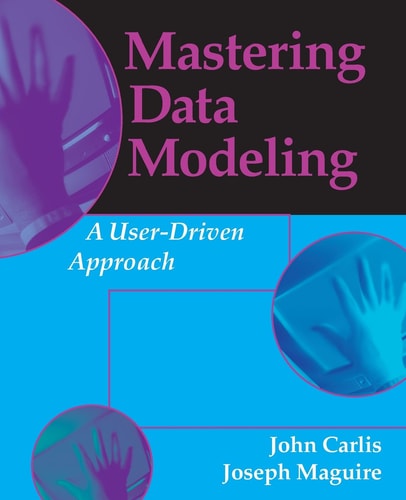
Data modeling is one of the most critical phases in the database application development process, but also the phase most likely to fail. A master data modeler must come into any organization, understand its data requirements, and skillfully model the data for applications that most effectively serve organizational needs.Mastering Data Modelingis a complete guide to becoming a successful data modeler. Featuring a requirements-driven approach, this book clearly explains fundamental concepts, introduces a user-oriented data modeling notation, and describes a rigorous, step-by-step process for collecting, modeling, and documenting the kinds of data that users need.Assuming no prior knowledge, Mastering Data Modelingsets forth several fundamental problems of data modeling, such as reconciling the software developer's demand for rigor with the users' equally valid need to speak their own (sometimes vague) natural language. In addition, it describes the good habits that help you respond to these fundamental problems. With these good habits in mind, the book describes the Logical Data Structure (LDS) notation and the process of controlled evolution by which you can create low-cost, user-approved data models that resist premature obsolescence. Also included is an encyclopedic analysis of all data shapes that you will encounter. Most notably, the book describes The Flow, a loosely scripted process by which you and the users gradually but continuously improve an LDS until it faithfully represents the information needs. Essential implementation and technology issues are also covered.
Menrva's Summary
THE THESIS
This book investigates the core challenge of bridging the gap between technical database requirements and the often imprecise natural language needs of end-users. John Carlis provides a comprehensive framework for data modeling that prioritizes user-driven requirements to ensure database longevity and functional accuracy. The text outlines a rigorous, step-by-step methodology designed to transform vague organizational needs into precise, logical data structures.
THE SCOPE MAP
What You Will Find
- The Logical Data Structure (LDS) notation system for documenting information requirements.
- The Flow, a structured process for the iterative improvement of data models through user collaboration.
- An encyclopedic analysis of common data shapes and patterns encountered in professional environments.
- Strategies for reconciling software developer rigor with user-oriented communication styles.
THE AUTHORITY PERSPECTIVE
Experts recognize this work as a foundational text for practitioners seeking to formalize their approach to database design. Readers frequently note the practical utility of the LDS notation and the clarity of the step-by-step process for managing complex data requirements.
Page Count:
404
Publication Date:
2000-11-09
Publisher:
Addison-Wesley Professional
ISBN-10:
020170045X
ISBN-13:
9780201700459
Data Modeling
Software Engineering
Information Systems
Computer Science
Community Tags
Similar Books