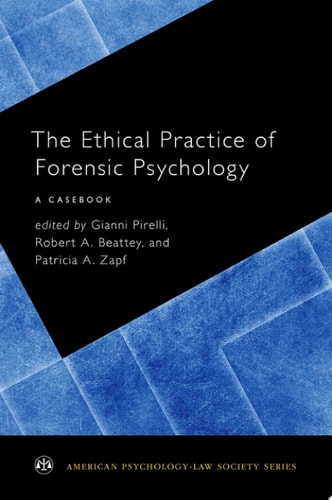
The Ethical Practice of Forensic Psychology: A Casebook
0
0
As an Amazon Associate and affiliate partner, Menrva Books earns from qualifying purchases. Learn more
Author Description
Few resources exist for those interested in developing their professional competence vis-à-vis ethics in forensic psychology, with the most recent text being published more than a decade ago. However, forensic psychology is changing quickly and there is a need for a current guide on ethics within the field.The Ethical Practice of Forensic Psychology highlights the ethical standards and guidelines set forth by the American Psychological Association's (APA) Ethical Principles of Psychologists and Code of Conduct (EPPCC) and the Specialty Guidelines for Forensic Psychology (SGFP). This Casebook provides readers with a practical review of these ethical standards and professional guidelines in the context of forensic case vignettes with corresponding commentary by leaders in the field. Concepts are presented using a best-practices model that encourages and promotes engaging in empirically supported decision-making. This volume is distinct from all others published in this area, given its inclusion and integration of a review of the ethical standards and guidelines contained in the EPPCC and SGFP, in addition to numerous types of ethical dilemmas encountered in forensic practice, a review of the relevant empirical literature and case law/legal statutes, and commentary by experts in forensic psychology. This unique Casebook will prove useful for a broad audience including academics in forensic psychology, psychology graduate and post-doctoral students and trainees, practitioners, mental health counselors, social workers, and legal professionals.
Menrva's Summary
THE THESIS
This book investigates how forensic psychologists can navigate complex ethical dilemmas by applying established professional standards to real-world practice. The authors, Gianni Pirelli, Patricia A. Zapf, and Robert A. Beattey, leverage their expertise to bridge the gap between theoretical guidelines and clinical application. They present a framework centered on empirically supported decision-making, utilizing the American Psychological Association's Ethical Principles of Psychologists and Code of Conduct alongside the Specialty Guidelines for Forensic Psychology to guide practitioners through the intricacies of legal and psychological intersectionality.
THE SCOPE MAP
What You Will Find
- Detailed review of the APA Ethical Principles of Psychologists and Code of Conduct
- Analysis of the Specialty Guidelines for Forensic Psychology
- Practical forensic case vignettes with expert commentary
- Integration of relevant empirical literature and legal statutes
Scope Limits
- The text focuses primarily on the United States legal and ethical framework
- It does not provide exhaustive coverage of international forensic psychology regulations
THE AUTHORITY PERSPECTIVE
Experts identify this work as a necessary update to the literature, providing a modern resource for practitioners and students alike. Readers frequently note the practical utility of the case-based approach in translating abstract ethical codes into actionable professional behaviors.
Page Count:
432
Publication Date:
2016-01-01
Publisher:
Oxford University Press
ISBN-10:
019025856X
ISBN-13:
9780190258566
Psychology
Forensic Psychology
Medical
Ethics
Allied Health
Law
Mental Health
Professional Development
Community Tags
Similar Books