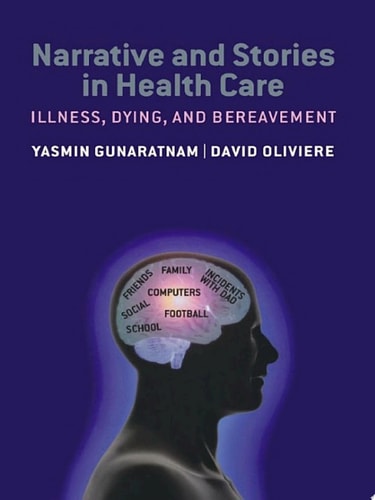
Narrative and Stories in Health Care: Illness, Dying and Bereavement
0
0
As an Amazon Associate and affiliate partner, Menrva Books earns from qualifying purchases. Learn more
Author Description
The use of narrative methods has a long history in palliative care, pioneered by Dame Cicely Saunders, founder of the modern hospice movement, Narrative and Stories in Health Care provides a vibrant, multidisciplinary examination of work with narrative and stories in contemporary health and social care, with a focus on the care of people who are ill and dying. It animates the academic literature with provocative 'real-world' examples from international contributors, including palliative care service users and those working in the social and human sciences, medicine, theology, and the creative arts. Narrative and Stories in Health Care addresses and clarifies core issues: What is a narrative? What is a story? What are some of the main methods and models that can be used and for what purposes? What practical and ethical dilemmas can the methods entail in work with illness, death and dying? As well as highlighting the power of stories to create new possibilities, the book also acknowledges the conceptual, methodological and ethnical problems and challenges inherent in narrative work. As the hospice and palliative care movement evolves to meet the challenges of 21st century health care, this fascinating book highlights how narratives and stories can be attended to in ways that are productive, ethical, and caring.
Menrva's Summary
THE THESIS
This book investigates the role, methodology, and ethical implications of narrative practices within contemporary palliative and end-of-life health care settings. Authors David Oliviere and Yasmin Gunaratnam curate a multidisciplinary collection of perspectives to examine how stories function in the care of the dying. By integrating insights from medicine, theology, the social sciences, and the creative arts, the text provides a framework for understanding the utility and complexity of narrative medicine. The authors argue that while stories offer significant potential for patient care, they also present distinct methodological and ethical challenges that practitioners must navigate.
THE SCOPE MAP
What You Will Find
- Theoretical definitions of narrative and story within clinical contexts
- Methodological models for collecting and analyzing patient experiences
- Multidisciplinary perspectives from international contributors including service users and academics
- Ethical frameworks for addressing the dilemmas of bereavement and dying
Scope Limits
- The text does not provide a singular, universal protocol for narrative therapy
- It does not focus on acute or curative medical interventions outside of palliative care
THE AUTHORITY PERSPECTIVE
Experts recognize this work as a significant contribution to the medical humanities, particularly for its focus on the intersection of clinical practice and the social sciences. Readers frequently note the academic density of the prose, which serves as a foundational resource for practitioners and researchers in hospice and palliative care.
Page Count:
260
Publication Date:
2009-01-01
Publisher:
OUP Oxford
ISBN-10:
0191006475
ISBN-13:
9780191006470
Social Work
Sociology
Ethics
Health Care
Allied Health
Medical
Community Tags
Similar Books