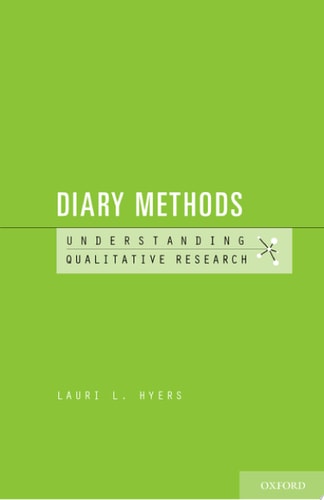
Diary Methods: Understanding Qualitative Research
0
0
As an Amazon Associate and affiliate partner, Menrva Books earns from qualifying purchases. Learn more
Author Description
Qualitative diary research is a unique tool with strengths that set it apart from other research methods. The diary prioritizes events embedded in context and time, a perspective that serves to destabilize constants, revealing the complex intersectionality of experience. Over the last several centuries, the mechanics of diary-keeping have evolved from simple records of ephemera into a primary research method. Today both archival and solicited diaries are used by social scientists who employ a range of qualitative, quantitative, and mixed-method data collection technologies. Researchers may consider the very possibility of conducting a qualitative diary study with some hesitation--in addition to sounding like a good deal of work, the method seems somewhat off the beaten path, a bit mysterious, and even kitschy. With a better understanding of what is involved, those who are considering the method may come to find that a diary study is well worth their while. In Diary Methods, Hyers provides her readers with a wealth of guidance and expert insight to ensure the success of their qualitative diary studies. The history of the diary from cultural phenomenon to social scientific method are explored, followed by a discussion of the use of archival and solicited diaries in qualitative designs, diary data collection and management, qualitative analysis and coding, composition and diary report writing, evaluating diary research, and special ethical considerations when using diaries in research.
Menrva's Summary
THE THESIS
This book investigates the utility and implementation of diary-keeping as a rigorous qualitative research method within the social sciences. Author Lauri L. Hyers provides a comprehensive framework for researchers to transition from viewing diaries as mere personal ephemera to utilizing them as structured, context-rich data collection tools that capture the intersectionality of human experience over time.
THE SCOPE MAP
What You Will Find
- Historical evolution of diary-keeping from cultural artifact to scientific instrument
- Methodologies for both archival and solicited diary data collection
- Techniques for data management, coding, and qualitative analysis
- Guidelines for report composition and ethical considerations in diary research
Scope Limits
- Does not provide an exhaustive guide to purely quantitative statistical analysis of diary data
- Does not cover software-specific technical tutorials for every available qualitative analysis program
THE AUTHORITY PERSPECTIVE
Experts recognize this text as a practical resource for social scientists seeking to integrate longitudinal, context-sensitive data into their research designs. Readers frequently note that the book successfully demystifies the logistical challenges associated with diary studies while providing clear, actionable steps for implementation.
Page Count:
223
Publication Date:
2017-01-01
Publisher:
Oxford University Press
ISBN-10:
0190256710
ISBN-13:
9780190256715
Diaries
Social Science
Qualitative Research
Introduction to Human Communication
Methodology
Communications
Academic writing
Introduction to Social WorkWelfare
General Anthropology
Research Methods
Community Tags
Similar Books