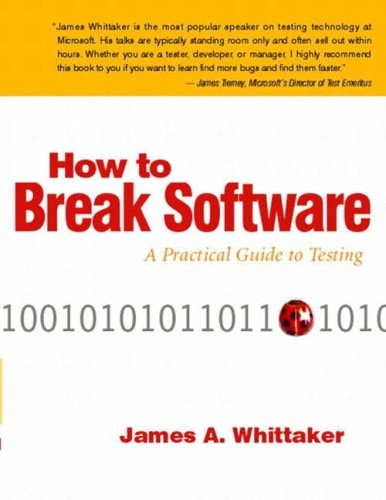
How to Break Software: A Practical Guide to Testing
0
0
As an Amazon Associate and affiliate partner, Menrva Books earns from qualifying purchases. Learn more
Author Description
How to Break Software is a departure from conventional testing in which testers prepare a written test plan and then use it as a script when testing the software. The testing techniques in this book are as flexible as conventional testing is rigid. And flexibility is needed in software projects in which requirements can change, bugs can become features and schedule pressures often force plans to be reassessed. Software testing is not such an exact science that one can determine what to test in advance and then execute the plan and be done with it. Instead of a plan, intelligence, insight, experience and a "nose for where the bugs are hiding" should guide testers. This book helps testers develop this insight. The techniques presented in this book not only allow testers to go off-script, they encourage them to do so. Don't blindly follow a document that may be out of date and that was written before the product was even testable. Instead, use your head! Open your eyes! Think a little, test a little and then think a little more. This book does teach planning, but in an "on- the-fly while you are testing" way. It also encourages automation with many repetitive and complex tasks that require good tools (one such tool is shipped with this book on the companion CD). However, tools are never used as a replacement for intelligence. Testers do the thinking and use tools to collect data and help them explore applications more efficiently and effectively.
Menrva's Summary
THE THESIS
This book investigates the limitations of rigid, script-based software testing and proposes an exploratory, intelligence-driven methodology for identifying software defects. James K. Whittaker, a recognized expert in software testing, argues that traditional test plans often fail to account for the dynamic nature of software development. By shifting the focus from static documentation to critical thinking and intuitive exploration, the author provides a framework that allows testers to adapt to changing requirements and schedule pressures effectively.
THE SCOPE MAP
What You Will Find
- Exploratory testing techniques that prioritize tester intuition over rigid scripts
- Strategies for on-the-fly test planning during the execution phase
- Methods for integrating automation tools to handle repetitive and complex tasks
- Approaches for identifying hidden bugs through analytical observation and critical thinking
THE AUTHORITY PERSPECTIVE
Experts and practitioners frequently cite this work as a foundational text for moving beyond traditional QA methodologies. Readers often note the practical, hands-on nature of the advice, which emphasizes the necessity of human intelligence in the software testing lifecycle.
Page Count:
208
Publication Date:
2002-05-09
Publisher:
Pearson
ISBN-10:
0201796198
ISBN-13:
9780201796193
Programming
Software Engineering
Technology
Computer Science
Community Tags
Similar Books