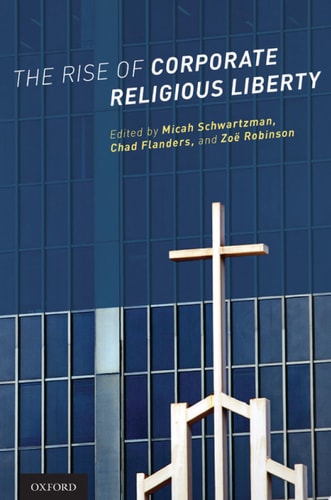
The Rise of Corporate Religious Liberty
0
0
As an Amazon Associate and affiliate partner, Menrva Books earns from qualifying purchases. Learn more
Author Description
What are the rights of religious institutions? Should those rights extend to for-profit corporations? Houses of worship have claimed they should be free from anti-discrimination laws in hiring and firing ministers and other employees. Faith-based institutions, including hospitals and universities, have sought exemptions from requirements to provide contraception. Now, in a surprising development, large for-profit corporations have succeeded in asserting rights to religious free exercise. The Rise of Corporate Religious Liberty explores this "corporate" turn in law and religion. Drawing on a broad range perspectives, this book examines the idea of "freedom of the church," the rights of for-profit corporations, and the implications of the Supreme Court's landmark decision in Burwell v. Hobby Lobby for debates on anti-discrimination law, same-sex marriage, health care, and religious freedom.
Menrva's Summary
THE THESIS
This book investigates the legal and ethical implications of extending religious free exercise rights to for-profit corporations. The authors, a team of legal scholars and experts in constitutional law, analyze the shift in jurisprudence that culminated in the Supreme Court's decision in Burwell v. Hobby Lobby. They present a multi-disciplinary framework to evaluate how this expansion of corporate rights impacts existing anti-discrimination laws, healthcare mandates, and the traditional understanding of religious freedom.
THE SCOPE MAP
What You Will Find
- Analysis of the "freedom of the church" doctrine and its evolution.
- Examination of the legal arguments surrounding for-profit corporate religious exemptions.
- Case studies on the intersection of religious liberty with anti-discrimination statutes and healthcare policy.
Scope Limits
- The text does not provide a comprehensive history of all religious freedom litigation in the United States.
- It does not offer a definitive legislative solution to the conflicts between corporate rights and civil rights.
THE AUTHORITY PERSPECTIVE
Legal scholars and practitioners frequently cite this work as a primary resource for understanding the complexities of the Hobby Lobby decision. Experts highlight the book's balanced approach in presenting diverse perspectives on the intersection of corporate law and religious practice.
Page Count:
517
Publication Date:
2015-01-01
Publisher:
Oxford University Press
ISBN-10:
0190262559
ISBN-13:
9780190262556
Religion
Corporate Law
Law
Professional Career & Trade
Sociology
Constitutional Law
Community Tags
Similar Books