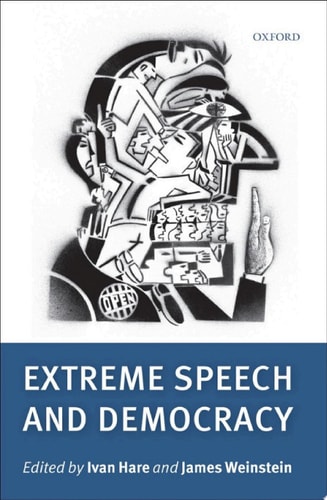
Extreme Speech and Democracy
0
0
As an Amazon Associate and affiliate partner, Menrva Books earns from qualifying purchases. Learn more
Author Description
A commitment to free speech is a fundamental precept of all liberal democracies. However, democracies can differ significantly when addressing the constitutionality of laws regulating certain kinds of speech. In the United States, for instance, the commitment to free speech under the First Amendment has been held by the Supreme Court to protect the public expression of the most noxious racist ideology and hence to render unconstitutional even narrow restrictions on hate speech. In contrast, governments have been accorded considerable leeway to restrict racist and other extreme expression in almost every other democracy, including Canada, the United Kingdom, and other European countries. This book considers the legal responses of various liberal democracies towards hate speech and other forms of extreme expression, and examines the following questions: What accounts for the marked differences in attitude towards the constitutionality of hate speech regulation? Does hate speech regulation violate the core free speech principle constitutive of democracy? Has the traditional US position on extreme expression justifiably not found favour elsewhere? Do values such as the commitment to equality or dignity legitimately override the right to free speech in some circumstances? With contributions from experts in a range of disciplines, this book offers an in-depth examination of the tensions that arise between democracy's promises.
Menrva's Summary
THE THESIS
This book investigates the fundamental tension between the protection of free speech and the regulation of extreme expression within various liberal democratic frameworks. Edited by legal scholars Ivan Hare and James Weinstein, the text compiles contributions from an interdisciplinary group of experts to analyze why nations diverge so sharply on the constitutionality of hate speech laws. The authors examine the philosophical and legal underpinnings that lead the United States to prioritize near-absolute expression while other democracies, such as Canada and the United Kingdom, prioritize values like equality and human dignity.
THE SCOPE MAP
What You Will Find
- Comparative analysis of First Amendment jurisprudence versus international legal standards.
- Examination of the philosophical justifications for restricting hate speech.
- Case studies on the legal treatment of racist and extreme expression in Europe and North America.
- Theoretical discussions on the relationship between democratic legitimacy and speech regulation.
Scope Limits
- The text does not provide a singular normative conclusion on which legal model is superior.
- It does not cover the history of speech regulation in non-democratic or authoritarian regimes.
THE AUTHORITY PERSPECTIVE
Legal scholars and political scientists frequently cite this work as a foundational comparative text for understanding the divergence between American and international free speech doctrines. Experts note the academic density of the prose, which makes it a primary resource for students and practitioners of constitutional law.
Page Count:
706
Publication Date:
2010-01-01
Publisher:
OUP Oxford
ISBN-10:
0191610453
ISBN-13:
9780191610455
Law
Freedom of speech
Hate speech
Constitutional Law
Human rights
Sociology
Comparative Politics
Professional Career & Trade
Community Tags
Other Editions(3)
Similar Books