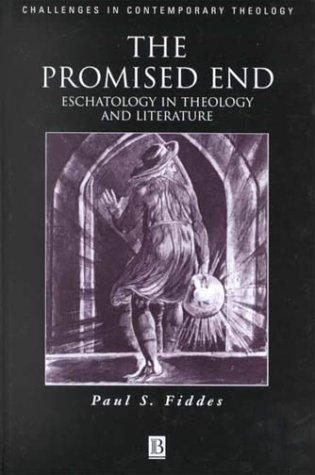
The Promised End: Eschatology in Theology and Literature
0
0
As an Amazon Associate and affiliate partner, Menrva Books earns from qualifying purchases. Learn more
Author Description
'Postmodern' critical theorists and many other writers emphasise the 'open' nature of endings, but this book suggests that the mixture of openness and closure in Christian eschatology not only offers a coherent sense of an ending, but may make it possible to construct endings in the here and now. On the way to this conclusion the book provides an exegesis of novels, plays and poems by such writers as John Fowles, Julian Barnes, Doris Lessing, Samuel Beckett, T. S. Eliot, Virginia Woolf, James Joyce and Shakespeare. Among critical theorists, postmodern and otherwise, it considers especially the ideas of Frank Kermode, Northrop Frye, Jacques Derrida and Paul Ricoeur. The author also examines the main themes of Christian eschatology - such as death, parousia, resurrection, human destiny and the nature of eternity - and offers a critical view of the doctrines of the last things produced by major modern theologians, including Jurgen Moltmann and Wolfhart Pannenberg. Through this dialogue the book aims to form an image of eternal 'wholeness' of persons in the life of the triune God that takes seriously the deconstruction of images of domination.--BOOK JACKET.
Menrva's Summary
THE THESIS
This book investigates the complex relationship between Christian eschatology and the concept of endings in literature and contemporary thought. It argues that the Christian understanding of an ending, which balances openness with closure, provides a coherent framework for comprehending ultimate destiny and can inform how we construct meaningful endings in our present lives. The author, Paul S. Fiddes, draws upon his expertise in theology and literary analysis to explore these themes.
THE SCOPE MAP
- Analysis of Christian eschatological themes: death, parousia, resurrection, human destiny, and the nature of eternity.
- Critical examination of modern theologians' doctrines on the last things, including works by Jürgen Moltmann and Wolfhart Pannenberg.
- Exegesis of novels, plays, and poems by prominent writers such as John Fowles, Julian Barnes, Doris Lessing, Samuel Beckett, T. S. Eliot, Virginia Woolf, James Joyce, and Shakespeare.
- Consideration of critical theorists' ideas, particularly those of Frank Kermode, Northrop Frye, Jacques Derrida, and Paul Ricoeur.
- Exploration of how literary representations of endings can inform theological perspectives on ultimate 'wholeness' in the life of the triune God.
- A critique of images of domination in theological and literary constructions of endings.
THE AUTHORITY PERSPECTIVE
The book engages with contemporary critical theory, particularly postmodern thought, which often emphasizes the open-ended nature of narratives and existence. It posits that Christian eschatology, with its inherent blend of openness and closure, offers a more robust model for understanding ultimate destiny and constructing meaningful conclusions in the present. The work is noted for its interdisciplinary approach, bridging theological inquiry with literary analysis.
Page Count:
299
Publication Date:
2000-01-01
ISBN-10:
0631220844
Non-Fiction
Religion
Philosophy
Theology
Christianity
Literary Criticism
Community Tags
Similar Books