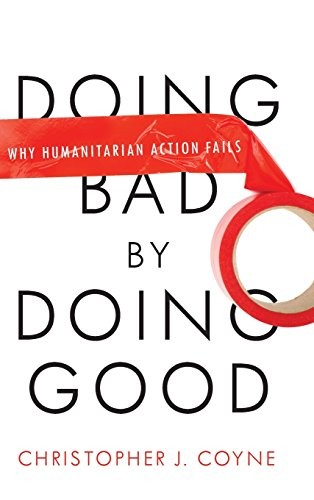
Doing Bad by Doing Good: Why Humanitarian Action Fails
0
0
As an Amazon Associate and affiliate partner, Menrva Books earns from qualifying purchases. Learn more
Author Description
In 2010, Haiti was ravaged by a brutal earthquake that affected the lives of millions. The call to assist those in need was heard around the globe. Yet two years later humanitarian efforts led by governments and NGOs have largely failed. Resources are not reaching the needy due to bureaucratic red tape, and many assets have been squandered. How can efforts intended to help the suffering fail so badly? In this timely and provocative book, Christopher J. Coyne uses the economic way of thinking to explain why this and other humanitarian efforts that intend to do good end up doing nothing or even causing harm.
Menrva's Summary
THE THESIS
This book investigates why well-intentioned humanitarian aid efforts frequently fail to achieve their goals and can even exacerbate existing problems. Christopher J. Coyne, drawing on economic principles, analyzes the systemic issues within governmental and NGO-led humanitarian interventions. He examines how bureaucratic inefficiencies, misallocation of resources, and unintended consequences lead to aid not reaching those most in need. The book uses the 2010 Haiti earthquake as a case study to illustrate these failures and argues for a reevaluation of current aid models.
THE SCOPE MAP
- Analysis of humanitarian aid failures through an economic lens.
- Case study of the 2010 Haiti earthquake relief efforts.
- Examination of bureaucratic red tape and resource squandering in aid organizations.
- Discussion of unintended negative consequences of humanitarian interventions.
- Proposals for rethinking and improving the effectiveness of aid.
- Critique of current governmental and NGO approaches to humanitarian assistance.
THE AUTHORITY PERSPECTIVE
The book is regarded as a provocative and timely critique of contemporary humanitarian aid practices, utilizing economic theory to dissect their shortcomings. It challenges conventional wisdom by arguing that well-intentioned efforts can lead to harm rather than help. The analysis, particularly through the lens of the Haiti earthquake, aims to stimulate debate on the efficacy and structure of global aid.
Page Count:
272
Publication Date:
2013-01-01
ISBN-10:
0804772274
ISBN-13:
9780804772273
Non-Fiction
Politics
Science
Economics
Social Science
Community Tags
Similar Books