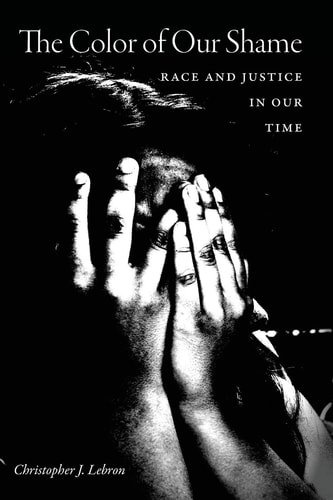
The Color of Our Shame: Race and Justice in Our Time
0
0
As an Amazon Associate and affiliate partner, Menrva Books earns from qualifying purchases. Learn more
Author Description
For many Americans, the election of Barack Obama as the country's first black president signaled that we had become a post-racial nation - some even suggested that race was no longer worth discussing. Of course, the evidence tells a very different story. And while social scientists are fully engaged in examining the facts of race, normative political thought has failed to grapple with race as an interesting moral case or as a focus in the expansive theory of social justice. Political thought's under participation in the debate over the status of blacks in American society raises serious concerns since the main academic task of political theory is to adjudicate discrepancies between the demands of ideal justice and social realities.Christopher J. Lebron contends that it is the duty of political thought to address the moral problems that attend racial inequality and to make those problems salient to a democratic polity. Thus, in The Color of Our Shame, he asks two major questions. First, given the success of the Civil Rights Act and the sharp decline in overt racist norms, how can we explain the persistence of systemic racial inequality? Second, once we have settled on an explanation, what might political philosophy have to offer in terms of a solution?In order to answer these questions Lebron suggests that we reconceive of racial inequality as a condition that marks the normative status of black citizens in the eyes of the nation. He argues that our collective response to racial inequality ought to be shame. While we reject race as a reason for marginalizing blacks on the basis of liberal democratic ideals, we fail to live up to those ideals - a situation that Lebron sees as a failure of national character. Drawing on a wide array of resources including liberal theory, virtue ethics, history, and popular culture, Lebron proposes a move toward a "perfectionist politics" that would compel a higher level of racially relevant moral excellence from individuals and institutions.
Menrva's Summary
THE THESIS
How can political philosophy account for the persistence of systemic racial inequality in the United States, and what moral obligations does this reality impose on the democratic state? Christopher J. Lebron, a scholar of political philosophy, argues that contemporary political theory has largely neglected race as a central moral concern. He contends that the nation's failure to reconcile its democratic ideals with the reality of racial inequality constitutes a profound moral failing, which he identifies as a national shame. By integrating liberal theory, virtue ethics, and historical analysis, Lebron proposes a perfectionist political framework designed to foster moral excellence regarding racial justice.
THE SCOPE MAP
What You Will Find
- A critique of current political theory's engagement with racial inequality.
- An analysis of the gap between liberal democratic ideals and social realities.
- A conceptual framework for understanding racial inequality as a marker of normative status.
- An argument for the role of shame as a catalyst for national moral accountability.
Scope Limits
- The text does not provide a comprehensive history of the Civil Rights movement.
- It does not offer a step-by-step policy manual for legislative reform.
THE AUTHORITY PERSPECTIVE
Scholars and critics frequently note the intellectual rigor of Lebron's synthesis of virtue ethics and political theory. Experts highlight this work as a significant contribution to the ongoing academic discourse regarding the moral responsibilities of a democratic society in the face of systemic inequality.
Page Count:
224
Publication Date:
2015-05-01
Publisher:
Oxford University Press
ISBN-10:
0190264675
ISBN-13:
9780190264673
Philosophy
United States
American History
Ethnic Studies
Ethics
Racism
Social justice
African Americans
Race Relations
Community Tags
Other Editions(2)
Similar Books










Reader Comments
Share Your Thoughts
No comments yet. Be the first to share your thoughts!