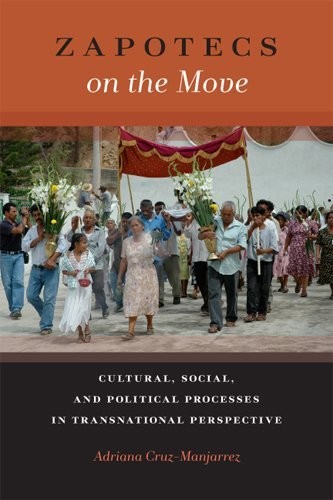
Zapotecs on the Move: Cultural, Social, and Political Processes in Transnational Perspective
0
0
As an Amazon Associate and affiliate partner, Menrva Books earns from qualifying purchases. Learn more
Author Description
"Through interviews with three generations of Yalálag Zapotecs ("Yaláltecos") in Los Angeles and Yalálag, Oaxaca, this book examines the impact of international migration on this community. It traces five decades of migration to Los Angeles in order to delineate migration patterns, community formation in Los Angeles, and the emergence of transnational identities of the first and second generations of Yalálag Zapotecs in the United States, exploring why these immigrants and their descendents now think of themselves as Mexican, Mexican Indian immigrants, Oaxaqueños, and Latinos--identities they did not claim in Mexico. Based on multi-site fieldwork conducted over a five-year period, Adriana Cruz-Manjarrez analyzes how and why Yalálag Zapotec identity and culture have been reconfigured in the United States, using such cultural practices as music, dance, and religious rituals as a lens to bring this dynamic process into focus. By illustrating the sociocultural, economic, and political practices that link immigrants in Los Angeles to those left behind, the book documents how transnational migration has reflected, shaped, and transformed these practices in both their place of origin and immigration."--Publisher's website.
Menrva's Summary
THE THESIS
This book investigates how international migration has reshaped the cultural, social, and political identities of the Zapotec community from Yalálag, Oaxaca, as they establish themselves in Los Angeles. Through multi-site fieldwork, Adriana Cruz-Manjarrez analyzes five decades of migration, examining the patterns of movement, the formation of communities in Los Angeles, and the evolving transnational identities of the first and second generations of Yalálag Zapotecs. The study explores the complex ways these immigrants and their descendants come to identify as Mexican, Mexican Indian, Oaxaqueño, and Latino, identities not previously claimed in their homeland. By focusing on cultural practices such as music, dance, and religious rituals, the book illuminates how these elements serve as a lens to understand the reconfiguration of Zapotec identity and culture in the United States, documenting the reciprocal influence between immigrants and their place of origin.
THE SCOPE MAP
- Analysis of five decades of migration patterns from Yalálag, Oaxaca, to Los Angeles.
- Examination of community formation and transnational identity among Yalálag Zapotecs in the United States.
- Exploration of the redefinition of ethnic and national identities (Mexican, Mexican Indian, Oaxaqueño, Latino).
- Case studies of cultural practices (music, dance, religious rituals) as indicators of identity reconfiguration.
- Documentation of sociocultural, economic, and political practices linking immigrants in Los Angeles to those in Oaxaca.
- Insights into how transnational migration transforms practices in both origin and destination locations.
THE AUTHORITY PERSPECTIVE
The book is recognized for its in-depth ethnographic approach to understanding the complexities of transnational migration and identity formation. Scholars likely appreciate its multi-site fieldwork and focus on specific cultural practices as analytical tools. The study's detailed examination of how immigrants and their descendants navigate multiple identities—Mexican, Indigenous, and Latino—provides valuable insights into the ongoing processes of cultural adaptation and reconfiguration in a transnational context.
Page Count:
268
Publication Date:
2013-01-01
ISBN-10:
0813560721
ISBN-13:
9780813560724
History
Politics
Science
Non-Fiction
Identity Formation
Transnationalism
Sociology
Los Angeles
Cultural Anthropology
Migration Studies
Community Tags
Similar Books