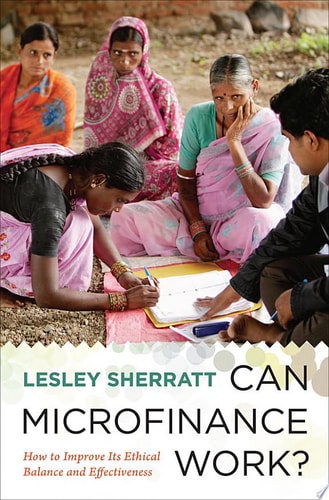
Can Microfinance Work?: How to Improve Its Ethical Balance and Effectiveness
0
0
As an Amazon Associate and affiliate partner, Menrva Books earns from qualifying purchases. Learn more
Author Description
Microfinance began with the noble aim of alleviating poverty through the extension of small loans to poor borrowers, and has grown to now serve approximately 200,000,000 people-the majority of whom are female. Yet despite claims to the contrary, the practice has not been proven to have succeeded in either enriching or empowering its borrowers. In a thorough-going ethical assessment of the industry, Can Microfinance Work? examines the central microfinance model and whether or not it is effective, the extent to which the practice creates the conditions for exploitation and coercion to occur, and whether the distribution of the benefits and burdens of microfinance is likely to be an ethical one. Author Lesley Sherratt argues for the establishment of a duty of care in microfinance in recognition of the vulnerability of the client base. She also examines the ethical dilemmas inherent in working in the informal sector, as well as microcredit's macro impact on economies. From there, Sherratt draws some wider lessons microfinance can offer anti-poverty developments in general.Challengingly, the book considers how microfinance might be reformed to ensure it is practiced both more ethically and effectively, and in doing so, argues that only a part of the industry may survive in its current form. The bulk could instead bifurcate in to one of two camps, either scaling down to become predominantly savings rather than credit vehicles, probably subsidized; or scaling up to provide credit to small and medium enterprise lending operations. For the rest, it is argued that establishing a non-exploitative interest rate, ending the practice of group liability, and fully specifying a duty of care -- with, if necessary, regulation developed to enforce these -- are microfinance's urgent ethical priorities.
Menrva's Summary
THE THESIS
This book investigates whether the current microfinance model effectively alleviates poverty or if it inadvertently fosters exploitation and coercion among vulnerable populations. Author Lesley Sherratt utilizes her background in financial analysis to evaluate the industry's ethical framework and its actual impact on borrowers. She argues that the sector requires a fundamental shift toward a formal duty of care and proposes specific structural reforms to ensure long-term viability and social responsibility.
THE SCOPE MAP
What You Will Find
- Analysis of the microcredit model and its macro-economic implications
- Ethical assessment of group liability and interest rate structures
- Proposed bifurcation of the industry into savings-led or SME-focused models
Scope Limits
- Does not provide a comprehensive history of every microfinance institution globally
- Does not focus on individual borrower success stories, prioritizing systemic and structural critique over anecdotal evidence
THE AUTHORITY PERSPECTIVE
Experts recognize this work as a critical contribution to the discourse on development finance and ethical banking standards. Readers frequently note the academic rigor of the prose and the author's willingness to challenge established industry norms.
Page Count:
252
Publication Date:
2015-01-01
Publisher:
Oxford University Press
ISBN-10:
0190264861
ISBN-13:
9780190264864
Economics
Finance
Microfinance
Poverty Alleviation
Ethics
Community Tags
Similar Books