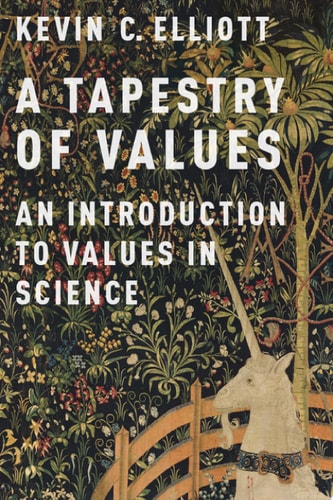
A Tapestry of Values
0
0
As an Amazon Associate and affiliate partner, Menrva Books earns from qualifying purchases. Learn more
Author Description
The Role Of Values In Scientific Research Has Become An Important Topic Of Discussion In Both Scholarly And Popular Debates. Pundits Across The Political Spectrum Worry That Research On Topics Like Climate Change, Evolutionary Theory, Vaccine Safety, And Genetically Modified Foods Has Become Overly Politicized. At The Same Time, It Is Clear That Values Play An Important Role In Science By Limiting Unethical Forms Of Research And By Deciding What Areas Of Research Have The Greatest Relevance For Society. Deciding How To Distinguish Legitimate And Illegitimate Influences Of Values In Scientific Research Is A Matter Of Vital Importance. Recently, Philosophers Of Science Have Written A Great Deal On This Topic, But Most Of Their Work Has Been Directed Toward A Scholarly Audience. This Book Makes The Contemporary Philosophical Literature On Science And Values Accessible To A Wide Readership. It Examines Case Studies From A Variety Of Research Areas, Including Climate Science, Anthropology, Chemical Risk Assessment, Ecology, Neurobiology, Biomedical Research, And Agriculture. These Cases Show That Values Have Necessary Roles To Play In Identifying Research Topics, Choosing Research Questions, Determining The Aims Of Inquiry, Responding To Uncertainty, And Deciding How To Communicate Information. Kevin Elliott Focuses Not Just On Describing Roles For Values But Also On Determining When Their Influences Are Actually Appropriate. He Emphasizes Several Conditions For Incorporating Values In A Legitimate Fashion, And Highlights Multiple Strategies For Fostering Engagement Between Stakeholders So That Value Influences Can Be Subjected To Careful And Critical Scrutiny.
Menrva's Summary
THE THESIS
This book investigates the complex question of how to distinguish between legitimate and illegitimate influences of values within scientific research. Kevin C. Elliott, a philosopher of science, synthesizes contemporary academic discourse to provide a framework for understanding how values shape scientific inquiry. By analyzing diverse research fields, the author argues that while values are inevitable in science, they must be subjected to rigorous scrutiny to ensure research integrity and public trust.
THE SCOPE MAP
What You Will Find
- Analysis of value roles in climate science, anthropology, and biomedical research
- A framework for evaluating the appropriateness of value-laden research decisions
- Strategies for fostering stakeholder engagement and critical scrutiny
Scope Limits
- Does not provide a comprehensive history of scientific philosophy
- Does not offer technical guidance on specific laboratory methodologies
THE AUTHORITY PERSPECTIVE
Experts recognize this work as a bridge between specialized philosophical literature and broader public discourse on scientific objectivity. Readers frequently note that the text successfully translates dense academic arguments into accessible language for non-specialists and practitioners alike.
Page Count:
224
Publication Date:
2017-01-01
Publisher:
Oxford University Press
ISBN-10:
0190260823
ISBN-13:
9780190260828
Sociology of Science
Philosophy of
Ethics
Science and Society
Community Tags
Similar Books