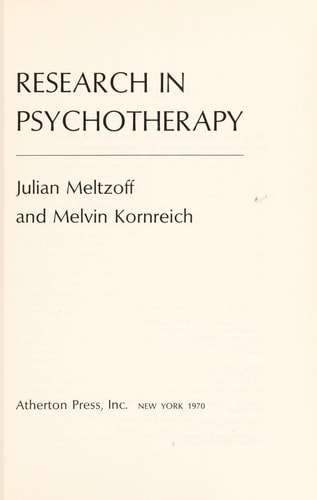
Research in Psychotherapy
0
0
As an Amazon Associate and affiliate partner, Menrva Books earns from qualifying purchases. Learn more
Author Description
Research in Psychotherapy is a comprehensive synthesis and assessment of the psychotherapeutic research literature for the use of both researchers and those in clinical practice. It is designed as a general reference work, an instruction guide, and a source of information about specific aspects and problems of research.The book consists of three parts. Part 1 discusses principles and methods of research as they are applied to psychotherapy. It provides general background material and principles to help non-researchers appreciate some of the important problems that are encountered. In Part 2, existing research on the effects of psychotherapy and the determinants and correlates of outcome are clustered and reviewed. Chapters 4 to 7 are concerned strictly with a review and appraisal of controlled studies that were designed to evaluate the effects of psychotherapy. Chapters 8 to 13 deal with a large body of research on various factors associated with therapeutic outcome--method, style, and technique variables; patient, therapist, and time variables. Part 3 is concerned with research on aspects of the therapeutic process and on the effect of many of these same variables on the therapeutic interchange as distinct from the outcome of therapy. Also discussed is research on various therapeutic phenomena and conditions about which so much has been written and so little really known.Research in Psychotherapy was written in the conviction that clinical practice should be influenced by research and that rigorous research that meets acceptable experimental standards can be done on the field of psychotherapy.
Menrva's Summary
THE THESIS
This work investigates the core question of how rigorous experimental research can be applied to the field of psychotherapy to inform and improve clinical practice. Julian Meltzoff, drawing on his background in clinical psychology, provides a structured framework for both researchers and practitioners to evaluate existing studies. The text argues that clinical interventions should be grounded in empirical evidence and provides the necessary tools to navigate the complexities of therapeutic outcome research. By bridging the gap between academic inquiry and clinical application, the author establishes a methodology for assessing the efficacy of various therapeutic techniques.
THE SCOPE MAP
What You Will Find
- Principles and methods of research applied specifically to psychotherapeutic settings.
- A comprehensive review and appraisal of controlled studies evaluating psychotherapy effects.
- Analysis of variables including patient characteristics, therapist style, and time factors.
- Examination of the therapeutic process and the dynamics of the therapeutic interchange.
THE AUTHORITY PERSPECTIVE
Experts and practitioners frequently cite this text as a foundational reference for understanding the intersection of clinical work and empirical research. Readers often note the systematic organization of the material, which makes complex experimental concepts accessible to those primarily focused on clinical practice.
Page Count:
561
Publication Date:
1970-01-01
Publisher:
Atherton Press, NY
ISBN-10:
020226050X
ISBN-13:
9780202260501
Psychology
Psychiatry research
Psychotherapy
Research Methods
Community Tags
Similar Books