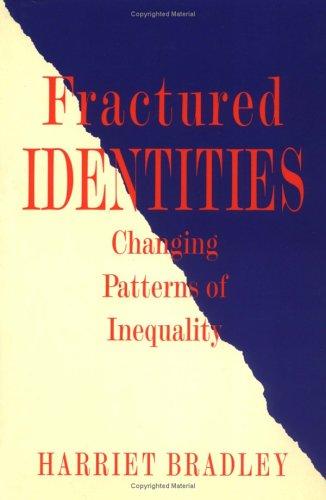
Fractured Identities
0
0
As an Amazon Associate and affiliate partner, Menrva Books earns from qualifying purchases. Learn more
Author Description
Despite claims about the 'classless society', modern industrial societies such as Britain and America are characterized by widening gaps between rich and poor. At the same time, inequalities of class overlap with other inequalities, such as those of ethnicity or gender. Recent research in sociology has highlighted the growing complexity of patterns of stratification and the interplay between different aspects of inequality. This book offers a comprehensive introduction to past and current theories of stratification and inequality. It pulls together work in the areas of class, gender, race and age, locating the analysis within current theories over modernity and postmodernity. Separate chapters on class, gender, race and age provide overviews of debates in a way designed to be accessible to students and also show how these four dimensions of inequality act upon one another. Unlike many other texts, the book covers both the modernist approaches derived from the sociological classics and newer contributions influenced by postmodernism and post-structuralism. While accepting the postmodern view that societies are becoming fragmented and social identities more fluid, Fractured Identities concludes that modernist insights are still vital. Modern societies are marked by both fragmentation and polarization.
Menrva's Summary
THE THESIS
This book investigates the complex and intersecting nature of social inequalities in modern industrial societies. It offers a comprehensive introduction to past and current theories of stratification, drawing together work on class, gender, race, and age. The analysis is situated within contemporary theories of modernity and postmodernity, exploring how these dimensions of inequality interact. The book argues that while societies may be fragmenting and identities becoming more fluid, modernist insights remain crucial for understanding the polarization evident in modern societies.
THE SCOPE MAP
- Overview of past and current theories of stratification and inequality.
- Analysis of class, gender, race, and age as dimensions of inequality.
- Exploration of the interplay between different aspects of inequality.
- Discussion of modernist and postmodernist approaches to social stratification.
- Examination of the concepts of modernity and postmodernity in relation to social structures.
- Case studies or theoretical frameworks illustrating the fragmentation and polarization of modern societies.
- Accessible presentation of complex sociological debates for students.
THE AUTHORITY PERSPECTIVE
The book provides a comprehensive introduction to theories of stratification and inequality, integrating discussions on class, gender, race, and age. It bridges modernist and postmodernist perspectives, offering a nuanced view of social structures. The work is noted for its accessibility to students while engaging with complex sociological debates. Its conclusion emphasizes the continued relevance of modernist insights in understanding contemporary societal fragmentation and polarization.
Page Count:
241
Publication Date:
1996-01-01
ISBN-10:
0745610838
ISBN-13:
9780745610832
Non-Fiction
Gender
Class
Race
Sociology
Inequality
Age
Modernity
Community Tags
Similar Books