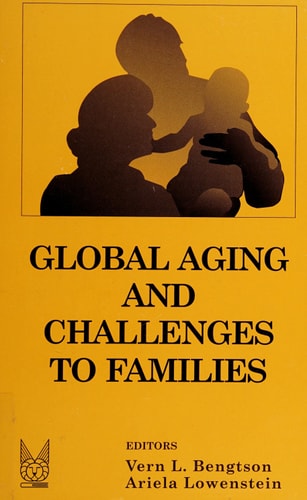
Global Aging and Challenges to Families
0
0
As an Amazon Associate and affiliate partner, Menrva Books earns from qualifying purchases. Learn more
Author Description
The recent explosion in population aging across the globe represents one of the most remarkable demographic changes in human history. There is much concern about population aging and its consequences for nations, for governments, and for individuals. It has often been noted that population aging will inevitably affect the economic stability of most countries and the policies of most state governments.What is less obvious, but equally important, is that population aging will profoundly affect families. Who will care for the growing numbers of tomorrow's very old members of societies? Will it be state governments? The aged themselves? Their families? The purpose of this volume is to examine consequences of global aging for families and intergenerational support, and for nations as they plan for the future.Four remarkable social changes during the past fifty years are (1) Extension of the life A generation has been added to the average span of life over the past century; (2) Changes in the age structures of Most nations today have many more elders, and many fewer children, than fifty years ago; (3) Changes in family structures and Some of these differences are the result of trends in family structure, notably higher divorce rates and the higher incidence of childbearing to single parents; (4) Changes in governmental In the last decade, governmental responsibility appears to have slowed or reversed as states reduce welfare expenditures.How will families respond to twenty-first-century problems associated with population aging? Will families indeed be important in the twenty-first century, or will kinship and the obligations across generations become increasingly irrelevant, replaced by "personal communities"? This volume goes a considerable distance to answer these critical issues for the twenty-first century.Vern L. Bengtson is an AARP/University Chair in Gerontology and Professor of Sociology, University of Southern California. Ariela Lowenstein is associate professor
Menrva's Summary
THE THESIS
This volume investigates the profound implications of global population aging on family structures, intergenerational support systems, and the shifting responsibilities between state governments and kinship networks. Editors Vern L. Bengtson and Ariela Lowenstein, both established scholars in gerontology and sociology, synthesize research to address how demographic shifts—such as increased life expectancy and changing age structures—challenge traditional caregiving models. The text argues that as state welfare expenditures potentially decline, the burden of care for the elderly increasingly falls upon families, necessitating a re-evaluation of intergenerational obligations in the twenty-first century.
THE SCOPE MAP
What You Will Find
- Analysis of demographic transitions including increased life expectancy and shifting age structures.
- Examination of the evolving relationship between state welfare policies and family caregiving responsibilities.
- Discussion of the impact of modern family trends such as divorce rates and single-parent households on elder support.
- Theoretical frameworks regarding the future relevance of kinship versus personal communities in aging societies.
THE AUTHORITY PERSPECTIVE
Experts recognize this volume as a significant contribution to the study of the life course and aging, providing a comprehensive look at the intersection of demography and family sociology. Readers frequently note the academic density of the prose, which serves as a foundational resource for students and researchers examining the socio-economic consequences of global aging.
Page Count:
387
Publication Date:
2018-01-01
Publisher:
Routledge
ISBN-10:
0202306879
ISBN-13:
9780202306872
Demography
Family Studies
Sociology
Social Science
Older people
Gerontology
Public Policy
Community Tags
Similar Books