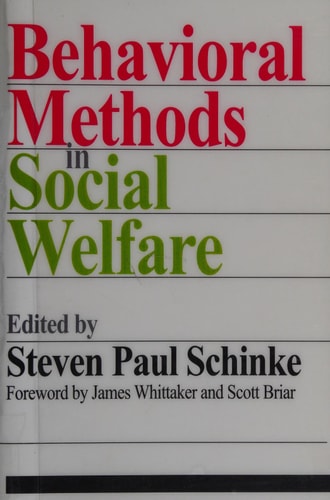
Behavioral Methods in Social Welfare: Helping Children, Adults, and Families in Community Settings
0
0
As an Amazon Associate and affiliate partner, Menrva Books earns from qualifying purchases. Learn more
Author Description
"Behavioral Methods in Social Welfare" offers positive proof that behaviorism has come of age in social work. Steven Paul Schinke and the contributors to this volume are social work practitioners who document their attempts to extend the basic tenets of behavioral psychology from the laboratory, clinic, and classroom to the full range of client groups and social problems that make up the practice of social work. In social work education, traditionally to the extent it appeared in the curriculum at all, behavioral content appeared in electives or in courses not focused on practice. It is a true measure of progress that behavioral methods are now visible, integral component of social work education and practice.The authors of each piece in this collection indicate progress in developing an empirically based approach to social work practice. Despite the impressive documentation contained in the present volume, no conclusive evidence as to the effectiveness of behavioral methods exists. What behavioral methods do offer, however, is a systematic format for both problem intervention and evaluation that, over time, should produce a more empirically based practice. A promising sign, well documented in the present effort, is the facility with which this book has subjected practice procedures to the rigor of research and evaluation.This blending of clinical practice and research develops the sense of competence that student-practitioners acquire in understanding and controlling both the art and science of their clinical practice. Steven Schinke and his colleagues offer a series of "snapshots" of important work in process. Their collective portrait provides a fresh perspective and new stimulus for all social work practice, as well as an affirmation that disciplined, responsive, and sensitive social work intervention can make a difference in the lives of people.
Menrva's Summary
THE THESIS
This volume investigates the integration of behavioral psychology principles into the practical framework of social work to enhance intervention and evaluation efficacy. The authors, including Steven Paul Schinke and James K. Whittaker, draw upon their extensive backgrounds in social work practice to argue that behavioral methods provide a systematic, empirically-oriented approach to addressing diverse client needs. By bridging the gap between laboratory-based behavioral science and community-based social services, the text advocates for a more rigorous, research-driven methodology in clinical settings.
THE SCOPE MAP
What You Will Find
- Applications of behavioral psychology across various client demographics including children, adults, and families.
- Methodologies for implementing systematic problem intervention and clinical evaluation in community settings.
- Case studies documenting the transition of behavioral techniques from controlled environments to social work practice.
- A framework for student-practitioners to balance the art and science of clinical intervention.
THE AUTHORITY PERSPECTIVE
Experts recognize this volume as a significant effort to formalize the role of behavioral science within the social work curriculum and professional practice. Readers frequently note the text's focus on bridging academic research with the practical realities of community-based social welfare.
Page Count:
418
Publication Date:
2007-07-30
Publisher:
Routledge
ISBN-10:
0202362140
ISBN-13:
9780202362144
Psychology
Social Work
Mental Health
Social Welfare
Social service
Behavior modification
Behavioral Science
Community Tags
Similar Books













Reader Comments
Share Your Thoughts
No comments yet. Be the first to share your thoughts!