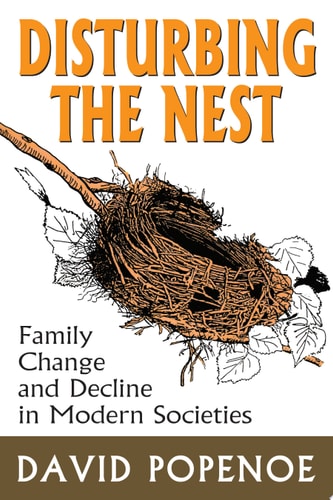
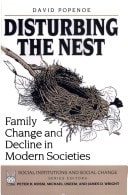
Disturbing the Nest
0
0
As an Amazon Associate and affiliate partner, Menrva Books earns from qualifying purchases. Learn more
Author Description
Disturbing The Nest Assesses The Future Of The Family As An Institution Through An Historical And Comparative Analysis Of The Nature, Causes, And Social Implications Of Family Change In Advanced Western Societies Such As The United States, New Zealand, And Switzerland By Focusing On The One Society In Which Family Decline Is Found To Be The Greatest, Sweden. The Founding Of The Modern Swedish Welfare State Was Based In Large Part On The Belief That It Was Necessary For The State To Intervene In Society In Order To Improve The Situation Of The Family. Of Great Concern Was The Low Birthrate, Which Was Seen As A Threat To The Very Survival Of Swedes As A National Population Group. The Social Democrats Pioneered Welfare Measures That Aimed To Strengthen The Family, To Alleviate Its Worst Trials And Tribulations, And To Make Possible Harmonious Living. With The Social Democrats Remaining In Power Continuously Until 1976, A Period Of Almost Forty-five Years, Sweden Went On To Implement Governmental Family Policies That Are Among The Most Comprehensive (and Expensive) In The World. In View Of This Major Policy Goal Of Family Improvement, The Actual Situation Of The Swedish Family Today Presents A Genuine Irony; Some Have Claimed That Swedish Welfare State Policies Have Had Consequences That Are The Opposite Of Those Originally Intended. Comparing Contemporary Swedish Family Patterns With Those Of Other Advanced Nations, One Finds A Very High Family Dissolution Rate, Probably The Highest In The Western World, And A High Percentage Of Single-parent, Female Headed Families. Even Marriage Seems To Have Fallen Increasingly Out Of Favor, With Sweden Having The Lowest Marriage Rate And Latest Age Of First Marriage, And The Highest Rate Of Children Born Out-of-wedlock. The Early Pronatalist Aspirations Of The Swedish Government Have Been Spectacularly Unsuccessful, As Sweden Continues To Have One Of The World's Lowest Birthrates And Smallest Average Family Sizes.
Menrva's Summary
THE THESIS
This work investigates whether the expansion of the modern welfare state, specifically in Sweden, has inadvertently contributed to the decline of the family as a stable social institution. David Popenoe, a sociologist specializing in family studies, utilizes historical data and comparative analysis to examine how government intervention in Western societies—particularly Sweden—has correlated with shifts in marriage rates, birthrates, and family structure. He argues that despite the original intent of social policies to support and strengthen the family unit, the long-term outcomes in Sweden suggest a paradoxical erosion of traditional family stability.
THE SCOPE MAP
What You Will Find
- Comparative analysis of family structures in the United States, New Zealand, and Switzerland.
- Longitudinal study of Swedish social policy from the mid-20th century through the 1970s.
- Statistical examination of divorce rates, out-of-wedlock births, and marriage trends.
- Evaluation of the efficacy of state-sponsored welfare measures on national birthrates.
THE AUTHORITY PERSPECTIVE
Sociologists and policy analysts frequently cite this text as a significant contribution to the debate regarding the unintended consequences of state intervention in private life. Readers often note the academic rigor of the comparative data, which provides a foundational look at the intersection of welfare policy and demographic change.
Page Count:
390
Publication Date:
1900-01-01
Publisher:
Transaction Publishers
ISBN-10:
0202365565
ISBN-13:
9780202365565
History
Sociology
Family Studies
Social policy
Community Tags
Other Editions(2)
Similar Books








Reader Comments
Share Your Thoughts
No comments yet. Be the first to share your thoughts!