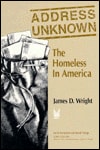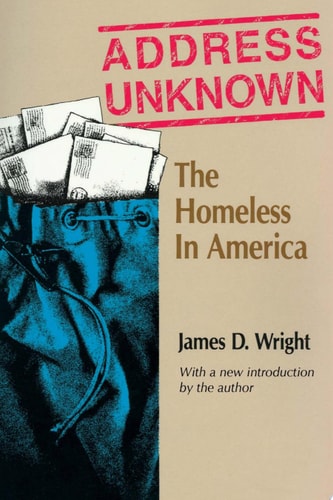
Address Unknown: The Homeless in America
0
0
As an Amazon Associate and affiliate partner, Menrva Books earns from qualifying purchases. Learn more
Author Description
Homelessness in America has grown from a minor problem in isolated areas of a few big cities into a near epidemic. Today, scarcely any American city of any appreciable size lacks homeless people. Homeless shelters and programs have become as essential and as commonplace as police protection or water and sewage treatment. What to do for, with, or about the homeless is a nagging and complex social policy issue debated at all levels of government.Address Unknown emphasizes the large-scale social and economic forces that have priced an increasingly large segment of the urban poor completely out of the housing market. Seen in this light, the problem of homelessness is that there are too many extremely poor people competing for too few aff ordable housing units. The nation would be facing a formidable homelessness problem even if there were no alcoholics, no drug addicts, no deinstitutionalized mentally ill people-no personal pathologies of any kind. Rather than a choice, homelessness is the result of housing markets that have very little to off er to extremely poor people.The plight of the homeless is very visible, and Address Unknown is one of the first major investigative studies into the nature and multiple causes of the problem. Wright considers demographic, economic, sociological, and social policy antecedents of homelessness. A hallmark is the delineation of the range of factors involved, including deinstitutionalization of the mentally ill, urban renewal, the decrease in lower-skilled jobs, changing political priorities, and bureaucratic obstacles to providing existing social services to the homeless population.
Menrva's Summary
THE THESIS
This work investigates the systemic economic and social drivers that have transformed homelessness from a localized issue into a pervasive national epidemic. James Wright, a prominent sociologist, utilizes extensive demographic data and policy analysis to argue that homelessness is primarily a structural failure of the housing market rather than a result of individual pathologies. By examining the intersection of urban renewal, labor market shifts, and the erosion of social safety nets, the author provides a comprehensive framework for understanding the displacement of the urban poor.
THE SCOPE MAP
What You Will Find
- Analysis of housing market dynamics and the scarcity of affordable units for low-income populations.
- Examination of the impact of deinstitutionalization on the mentally ill within urban environments.
- Evaluation of bureaucratic barriers that prevent the effective delivery of social services.
- Assessment of the decline in lower-skilled employment opportunities and its correlation with housing instability.
THE AUTHORITY PERSPECTIVE
Experts recognize this text as a foundational study in the sociology of homelessness, frequently cited for its rigorous structural analysis. Readers often note the academic density of the prose, which provides a detailed, evidence-based look at the policy failures surrounding urban poverty.
Page Count:
220
Publication Date:
2009-04-15
Publisher:
Routledge
ISBN-10:
0202362574
ISBN-13:
9780202362571
United States
Sociology
Urban Studies
Public Policy
Homelessness
Social Science
Social Issues
Poverty
Community Tags
Similar Books