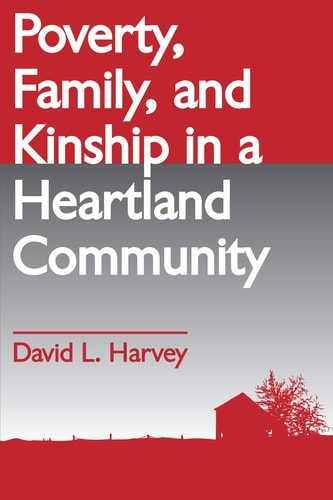
Poverty, Family, and Kinship in a Heartland Community
0
0
As an Amazon Associate and affiliate partner, Menrva Books earns from qualifying purchases. Learn more
Author Description
With A Few Notable Exceptions, Sociological Studies Of Poor, Native-born, Non-ethnic Whites In Rural Areas Are Rare. This Book Corrects This Oversight With An Ethnographic Study Of A Small, Poor, White, Heartland Community That The Author Calls Potter Addition. The Community Consists Of Some 100 Families And Is Located On The Rural-urban Fringe Of A Medium-sized Midwestern City. Poverty, Family, And Kinship In A Heartland Community Is The Story Of Three Generations Of Rural Families Who, One After Another, Have Been Driven From The Land During The Last Seventy-five Years. Harvey Argues Against The Grain Of A Number Of Recent Studies That Potter Addition's Poverty, Like Much Modern Poverty, Has Its Origins In The Productive Contradictions Of Late Capitalism. It Is Not The Result Of Some Moral Or Motivational Defect Of The Poor Themselves. At The Same Time He Shows, Even As They Struggle To Survive Their Uncertain Niche And Learn How To Adapt, These Families Play An Active Role In Reproducing The Everyday Material And Cultural Details Of Their Poverty From The Substance Of Their Daily Experiences. Working From This Premise, Harvey Provides A Detailed Ethnographic Description Of Potter Addition And Its People. The Volume Focuses Especially On The Family And Kinship Structures That Have Developed In Potter Addition And Shows How They Fit Into The Overall Response Of The Poor To Their Uncertain And Unpredictable Class Situation. This Is A Unique Effort By A Knowledgeable Researcher Who, In This Work, Boldly Steps Outside Conventional Realms Of Discourse In Sociology And Geography. David L. Harvey Is Professor Of Sociology At The University Of Nevada, Reno. He Is Interested In The Fields Of Chaos Theory And Social Revolution And What They Mean For Sociological Research. He Has Written Many Articles On Chaos Theory And Its Application In The Social Sciences.
Menrva's Summary
THE THESIS
This book investigates the structural origins of poverty within a rural, white, non-ethnic community, challenging the notion that such economic conditions stem from individual moral or motivational deficits. David L. Harvey, a professor of sociology, utilizes ethnographic research conducted in a community he identifies as Potter Addition to argue that the residents' economic instability is a direct consequence of the productive contradictions inherent in late capitalism. By examining three generations of families displaced from the land, Harvey constructs a framework that links macro-economic shifts to the specific, everyday survival strategies of the community members.
THE SCOPE MAP
What You Will Find
- An ethnographic study of approximately 100 families residing on the rural-urban fringe of a Midwestern city.
- An analysis of how family and kinship structures function as adaptive mechanisms in response to unpredictable class situations.
- A historical examination of seventy-five years of land displacement and economic marginalization.
- A theoretical argument connecting local material conditions to the broader systemic pressures of late capitalism.
THE AUTHORITY PERSPECTIVE
Experts recognize this work as a significant contribution to rural sociology for its focus on a demographic often overlooked in academic literature. Readers frequently note the dense, theoretical nature of the prose, which bridges the gap between traditional ethnographic observation and critical social theory.
Page Count:
336
Publication Date:
2008-05-15
Publisher:
Routledge
ISBN-10:
0202362051
ISBN-13:
9780202362052
Middle West
Anthropology
Social Science
Poverty
Rural poor
Rural Studies
Sociology
Ethnography
Community Tags
Similar Books