Analog Science Fiction / Science Fact, Vol. 79, No. 6
0
0
As an Amazon Associate and affiliate partner, Menrva Books earns from qualifying purchases. Learn more
Author Description
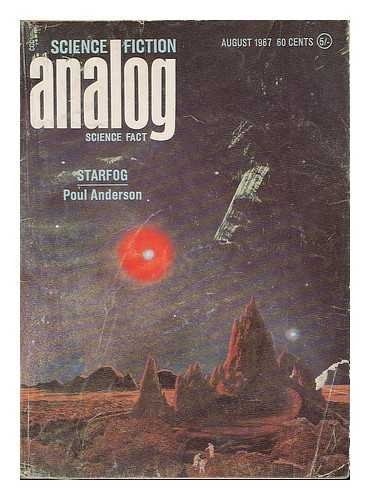
Analog Science Fiction / Science Fact, August 1967 (Vol. LXXIX, No. 6) edited by John W. Campbell, with cover art by Chesley Bonestell and interior illustrations by John Schoenherr, Rudi Palais, Jonathan Blair, and Leo Summers. Fiction and non-fiction contents include: Starfog, a short novel by Poul Anderson; The Featherbedders, a novelette by Frank Herbert; Babel II, a short story by Christopher Anvil; Cows Can't Eat Grass, a short story by Walt and Leigh Richmond; Depression or Bust, a short story by Mack Reynolds; The Misers; a science fact article by William T. Powers; and The Red and Blue Giant, an editorial by John W. Campbell. Regular features include: The Analytical Laboratory; In Times to Come; The Reference Library, with book reviews by P. Schuyler Miller; and Brass Tacks, with letters from the readers.
Menrva's Summary
THE PULSE
This anthology captures the mid-century intersection of speculative fiction and scientific inquiry through a collection of narratives and essays curated by John W. Campbell. The volume presents a variety of protagonists navigating complex technological and social landscapes, ranging from interstellar exploration to economic forecasting. Each story operates within the rigorous logical constraints typical of the era's hard science fiction, emphasizing technical problem-solving and the extrapolation of current scientific trends into future scenarios. The narrative framework shifts between the expansive scope of Poul Anderson's short novel and the focused, character-driven dilemmas found in the shorter pieces.
INSIDE THE PAGES
- Features the short novel Starfog by Poul Anderson
- Includes the novelette The Featherbedders by Frank Herbert
- Contains short fiction by Christopher Anvil, Walt and Leigh Richmond, and Mack Reynolds
- Presents a science fact article titled The Misers by William T. Powers
- Includes an editorial by editor John W. Campbell titled The Red and Blue Giant
- Features cover art by renowned space artist Chesley Bonestell
- Incorporates regular columns such as The Analytical Laboratory and The Reference Library
- Provides reader engagement through the Brass Tacks correspondence section
THE COLLECTIVE ECHO
Readers frequently highlight this issue as a representative example of the mid-1960s science fiction landscape under Campbell's editorial direction. Discussion often centers on the technical precision of the featured stories and the balance between speculative fiction and the accompanying science fact articles. Critics note that the pacing remains consistent with the magazine's tradition of prioritizing intellectual rigor over purely emotional arcs. The inclusion of established authors like Frank Herbert and Poul Anderson provides a high standard of world-building that continues to interest historians of the genre. The publication serves as a snapshot of the era's scientific optimism and the specific editorial voice that defined the magazine for decades.
Page Count:
180
Publication Date:
1967-01-01
Publisher:
Condé Nast Publications
ISBN-10:
0202867080
ISBN-13:
9780202867083
Science
Science Fiction
Anthology
Science Fiction
Periodical
Short Story
Community Tags
Similar Books