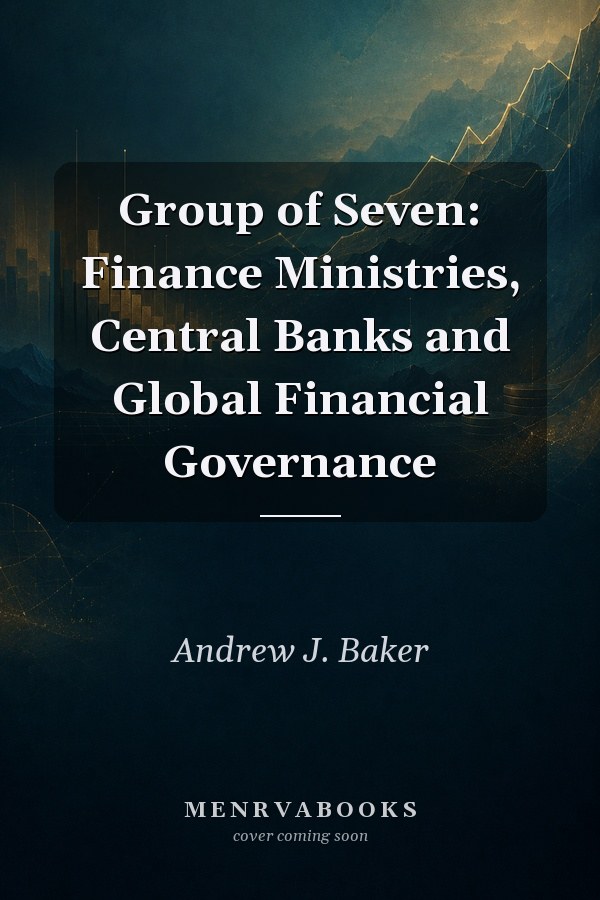
Group of Seven: Finance Ministries, Central Banks and Global Financial Governance
0
0
As an Amazon Associate and affiliate partner, Menrva Books earns from qualifying purchases. Learn more
Author Description
We Are Now In The Era Of The G8, Although The G7 Still Exists As A Grouping For Finance Ministers. Why Do G7 Finance Ministries And Central Banks Co-operate? What Are The Implications Of This Co-operation For Us Power And The Abilities Of The Other Six States To Exercise Leadership? What Role Do The G7 Play In Global Financial Governance? How Much Authority Do They Possess And How Is That Authority Exercised? This Is The First Major Monograph On The Political Economy Of G7 Finance Ministry And Central Bank Co-operation. It Argues That To Understand The Contribution Of The G7 To Global Financial Governance It Is Necessary To Locate The Process In The Context Of A Wider World Financial Order Comprised Of Decentralized Globalization. It Also Provides Original Case Study Material On The G7’s Contribution To Macroeconomic Governance And To Debates On The Global Financial Architecture Over The Last Decade. It Assesses The G7’s Role In Producing A System Of Global Financial Governance Based On Market Supremacy And Technocratic Transgovernmental Consensus And Articulates Normative Criticisms Of The G7’s Exclusivity. For Researchers In The Fields Of Ir/ipe Generally, Postgraduate Students In The Field Of International Organization And Global Governance, Policy Makers And Financial Journalists This Is The Most Extensive Analysis Of The G7 And The Political Economy Of Global Financial Governance To Date.
Menrva's Summary
THE THESIS
This book investigates the political economy of the G7 finance ministries and central banks to determine how their cooperation shapes global financial governance. Andrew J. Baker, a scholar in international political economy, utilizes a framework of decentralized globalization to analyze the mechanisms of power within these institutions. He argues that the G7 functions primarily to reinforce market supremacy through a technocratic transgovernmental consensus, often at the expense of broader international inclusivity. The work provides a critical assessment of how these seven states exert influence over the global financial architecture.
THE SCOPE MAP
What You Will Find
- Analysis of the political economy behind G7 finance ministry and central bank cooperation.
- Examination of the G7's role in macroeconomic governance and global financial architecture.
- Original case studies covering the last decade of G7 policy interventions.
- Critical evaluation of the normative implications of G7 exclusivity and technocratic decision-making.
THE AUTHORITY PERSPECTIVE
Experts recognize this monograph as a foundational text for understanding the intersection of international relations and global financial governance. Readers frequently note the academic density of the prose, making it a primary resource for postgraduate students and policy researchers in the field of international political economy.
Page Count:
296
Publication Date:
2006-01-01
Publisher:
Taylor & Francis Group
ISBN-10:
0203001494
ISBN-13:
9780203001493
Economics
Governance
Finance
International relations
Globalization
Community Tags
Similar Books