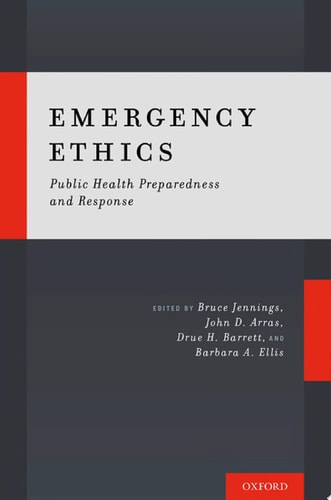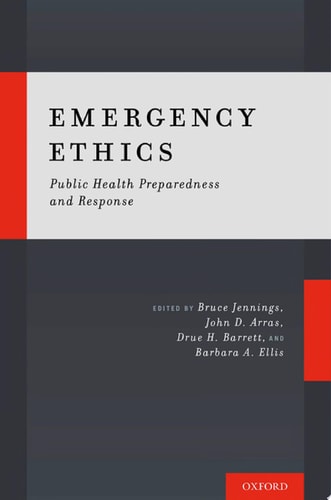
Emergency Ethics: Public Health Preparedness and Response
0
0
As an Amazon Associate and affiliate partner, Menrva Books earns from qualifying purchases. Learn more
Author Description
Emergency Ethics brings together leading scholars in the fields of public health ethics and bioethics to discuss disaster or emergency ethics and ethical aspects of preparedness and response with specific application to public health policy and practice. The book fills a gap in the existing public health ethics literature by providing a comprehensive ethical conception of emergency preparedness as a distinctive form of civic "practice" brought about by the interrelationships and coordination of many groups, disciplines, and interests and drawing on numerous bodies of knowledge and expertise. It addresses particular aspects of preparedness and response plans, particular decisions that planners and communities have to make, decisions that require balancing many diverse and sometimes conflicting values and identifying and applying a framework of basic ethical principles for preparedness planning, emergency response, and post-disaster recovery. It also explores the relationship between emergency preparedness to other facets of public health practice.The book begins with a broad and synthetic overview of emergency ethics that addresses the central components and ethically significant issues arising in public health preparedness planning, disaster response, and recovery. Following that overview are five chapters that in a philosophically innovative and detailed way delve deeply into important and problematic issues in emergency planning and response, including the allocation of scarce resources, conducting ethical research in the context of public health emergencies, the obligations of public health professionals, communication and engagement with the public, and special moral obligations surrounding vulnerable populations.
Menrva's Summary
THE THESIS
This work investigates the ethical frameworks required to navigate the complex decision-making processes inherent in public health preparedness and disaster response. The authors, a collaborative group of scholars in bioethics and public health, argue that emergency preparedness constitutes a unique form of civic practice that necessitates the balancing of competing values and the application of consistent moral principles across planning, response, and recovery phases.
THE SCOPE MAP
What You Will Find
- Ethical frameworks for resource allocation during public health emergencies
- Guidelines for conducting ethical research under crisis conditions
- Analysis of professional obligations for public health practitioners
- Strategies for public communication and community engagement
- Moral considerations regarding the protection of vulnerable populations
Scope Limits
- Does not provide specific operational or logistical manuals for emergency response
- Does not cover international law or geopolitical conflict resolution
THE AUTHORITY PERSPECTIVE
Experts identify this text as a foundational resource for integrating ethical theory into practical public health policy. Readers frequently note the academic density of the prose, which serves as a rigorous guide for policymakers and bioethicists alike.
Page Count:
320
Publication Date:
2016-03-29
Publisher:
Oxford University Press
ISBN-10:
0190270748
ISBN-13:
9780190270742
Bioethics
Public Policy
Public Health
Medical Ethics
Community Tags
Similar Books