Crime, Policing, and Place
0
0
As an Amazon Associate and affiliate partner, Menrva Books earns from qualifying purchases. Learn more
Author Description
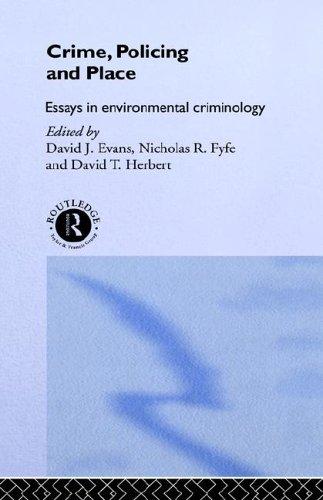
Spiraling crime rates and growing public concern about police-community relations have given crime and policing a high priority on the social and political agenda. The awareness of crime continues to affect the lives of ordinary people and to stimulate policy-makers who recognize that crime rates form one of the standards by which their effectiveness is judged. Of the many agencies involved in the battle against crime, the police in their various roles constitute the most obvious front line. Drawing on case study material from the United States, Britain, Europe, and Canada, Crime, Policing and Place examines the significance of spatial patterns of crime and the processes which produce them. The book analyzes the implications of theoretical and methodological innovation in the study of crime and policing, the processes which underlie the uneven distribution and impact of crime, and the success of recent policies aimed at preventing crime and enhancing police-community relations. The contributors are drawn from a variety of academic disciplines which include criminology, geography and social policy, and police and government agencies with direct input into policy.
Menrva's Summary
THE THESIS
This book investigates the intricate relationship between crime, policing strategies, and the geographical spaces they inhabit. Drawing on case studies from the United States, Britain, Europe, and Canada, it delves into the significance of spatial patterns in crime and the underlying processes that generate them. The work examines theoretical and methodological advancements in understanding crime and policing, the factors contributing to the uneven distribution and impact of crime, and the effectiveness of contemporary policies aimed at crime prevention and improving police-community relations.
THE SCOPE MAP
- Analysis of spatial patterns of crime and their production processes.
- Examination of theoretical and methodological innovations in criminology and geography.
- Exploration of the uneven distribution and impact of crime across different locales.
- Assessment of policies designed for crime prevention and enhanced police-community relations.
- Case study material from the United States, Britain, Europe, and Canada.
- Contributions from academics in criminology, geography, and social policy, as well as practitioners from police and government agencies.
THE AUTHORITY PERSPECTIVE
The book addresses the pressing issues of rising crime rates and strained police-community relations, placing them high on the social and political agenda. It analyzes the spatial dimensions of crime and policing, incorporating diverse theoretical and methodological approaches. The contributors, a mix of academics and practitioners, offer insights into policy-making and the effectiveness of crime prevention strategies. The work is positioned as a significant contribution to understanding the complex interplay between crime, place, and law enforcement.
Page Count:
332
Publication Date:
1992-01-01
ISBN-10:
0415049903
History
Non-Fiction
Crime
Politics
Criminology
Law Enforcement
Urban Studies
Geography
Social policy
Community Tags
Similar Books