Freedom, Fatalism & Foreknowledge
0
0
As an Amazon Associate and affiliate partner, Menrva Books earns from qualifying purchases. Learn more
Author Description
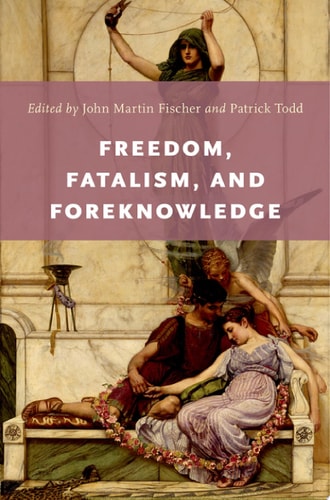
We typically think we have free will. But how could we have free will, if for anything we do, it was already true in the distant past that we would do that thing? Or how could we have free will, if God already knows in advance all the details of our lives? Such issues raise the specter of "fatalism". This book collects sixteen previously published articles on fatalism, truths about the future, and the relationship between divine foreknowledge and human freedom, and includes a substantial introductory essay and bibliography. Many of the pieces collected here build bridges between discussions of human freedom and recent developments in other areas of metaphysics, such as philosophy of time. Ideal for courses in free will, metaphysics, and philosophy of religion, Freedom, Fatalism, and Foreknowledge will encourage important new directions in thinking about free will, time, and truth.
Menrva's Summary
THE THESIS
This book investigates the logical compatibility of human free will with the existence of fatalism and divine foreknowledge. The authors, John Martin Fischer and Patrick Todd, are established scholars in the field of analytic philosophy who curate a collection of essays examining how truths about the future and omniscient foreknowledge challenge traditional notions of human agency. The text provides a rigorous framework for evaluating whether actions can be considered free if their outcomes were determined in the distant past.
THE SCOPE MAP
What You Will Find
- Sixteen scholarly articles on fatalism and divine foreknowledge
- A substantial introductory essay contextualizing the debate
- Analysis of the intersection between free will and the philosophy of time
- A comprehensive bibliography for further research
Scope Limits
- The text does not provide a general introduction to ethics or political philosophy
- It focuses primarily on analytic metaphysical arguments rather than theological or historical narratives
THE AUTHORITY PERSPECTIVE
Experts identify this collection as a foundational resource for advanced students and researchers in metaphysics and the philosophy of religion. Readers frequently note the academic density of the prose, which is designed for those already familiar with formal logic and contemporary philosophical discourse.
Page Count:
416
Publication Date:
2015-01-01
Publisher:
Oxford University Press
ISBN-10:
019027333X
ISBN-13:
9780190273330
Religion
Philosophy
Philosophy of
Ethics
History & Surveys
Free Will
Metaphysics
Community Tags
Similar Books