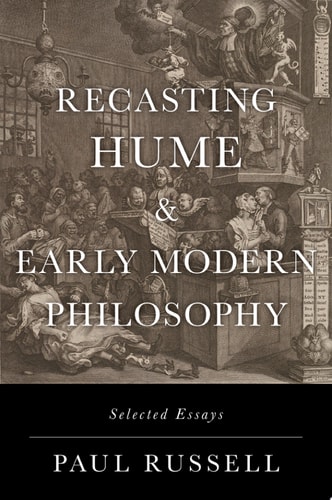
Recasting Hume and Early Modern Philosophy: Selected Essays
0
0
As an Amazon Associate and affiliate partner, Menrva Books earns from qualifying purchases. Learn more
Author Description
In this collection of essays, philosopher Paul Russell addresses major figures and central topics of the history of early modern philosophy. Most of these essays are studies on the philosophy of David Hume, one of the great figures in the history of philosophy. One central theme, connecting many of the essays, concerns Hume's fundamental irreligious intentions. Russell argues that a proper appreciation of the significance of Hume's irreligious concerns, which runs through his whole philosophy, serves to discredit the deeply entrenched framework for understanding Hume - and much of early modern philosophy - in terms of the idea of "British Empiricism". In a substantive introduction, Russell outlines how his various insights overlap and connect to each other. The volume is organized thematically into five sections: metaphysics, free will, ethics, religion, and general interpretations of Hume's philosophy. The collection also features a previously unpublished essay on Hume's atheism and an essay on Adam Smith's views on religion and ethics that has not been previously published in English. Recasting Hume and Early Modern Philosophy presents the reader with Russell's substantial and significant set of interconnected observations and insights on the matters and figures of the greatest importance in early modern philosophy. These essays not only provide different and original perspectives on the subject, they also show that the various issues addressed are very relevant to each other, as well as to a number of major topics in contemporary philosophy.
Menrva's Summary
THE THESIS
This collection investigates whether the traditional framework of 'British Empiricism' obscures the fundamental irreligious intentions driving the philosophy of David Hume and his contemporaries. Paul Russell, a scholar specializing in Hume, utilizes historical analysis and textual interpretation to argue that Hume's skepticism and irreligious concerns are central to his entire philosophical project. By re-evaluating these core motivations, the author challenges established academic narratives and proposes a more cohesive understanding of early modern philosophical development.
THE SCOPE MAP
What You Will Find
- A thematic organization covering metaphysics, free will, ethics, and religion.
- A critical reassessment of the 'British Empiricism' historical framework.
- Previously unpublished essays regarding Hume's atheism and Adam Smith's ethical views.
- Interconnected arguments linking early modern debates to contemporary philosophical discourse.
THE AUTHORITY PERSPECTIVE
Scholars and students of early modern philosophy frequently note the academic density and rigorous argumentation present throughout these essays. Experts highlight this collection as a significant contribution to Humean studies that successfully challenges long-standing interpretations of the period.
Page Count:
517
Publication Date:
2021-01-01
Publisher:
Oxford University Press
ISBN-10:
0197577288
ISBN-13:
9780197577288
Religion
Philosophy
Ethics
History & Surveys
Philosophy Modern
Philosophy history
Metaphysics
Community Tags
Similar Books