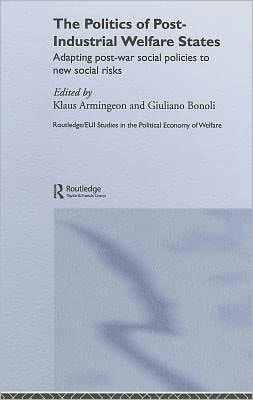
Politics of Post-Industrial Welfare States: Adapting Post-War Social Policies to New Social Risks
0
0
As an Amazon Associate and affiliate partner, Menrva Books earns from qualifying purchases. Learn more
Author Description
This Is The First Political Science Book To Focus On New Social Risks And Their Implication For Politics And Policy-making. The Welfare States That Exist Today In Most Industrial Countries Were Conceived And Developed During The Post-war Years, With The Objective Of Protecting The Income Of Wage-earners Against Risks Such As Sickness, Unemployment, Invalidity Or Old Age. These Social Risks Are Still Present In Today's Societies, But They Have Been Supplemented By New Social Risks, Especially In The Labour Market And Family Sphere, Such As Lone Parenthood, Difficulties In Reconciling Work And Family Life, Low Pay, Or Long-term Unemployment. In General, However, The Welfare States That We Have Inherited From The Post-war Years Provide Only Limited Coverage Against These New Risks.. This Book Concentrates On The Process Of Adapting Welfare States To Changing Structures Of Social Risk. First, It Looks At How Those Who Are Most Exposed To The New Risks (women, The Young, Low-skilled Workers) Mobilise In The Political Arena And At Their Demands, Then Moves On To Analyse Specific Instances Of Welfare State Adaptation In The Fields Of Care Policy, Pensions And Labour Market Policies. This Is A Coherent Collection Of Comparative Chapters Which Cover Either All, Or A Sample Of, Advanced Industrial Democracies. Together, They Show How Difficult The Adaptation Process Is, And In Particular Because Of The Existence Of Strong Competing Claims For Public Resources By Those Political Actors Who Fight For The Preservation Of The Traditional Welfare State Programmes. This Volume Will Be Of Great Interest To Political Scientists Working On The Eu Or Oecd Countries, Focusing On Social Policy And Welfare.
Menrva's Summary
THE THESIS
This book investigates the structural challenges faced by post-industrial welfare states as they attempt to reconcile traditional social protections with the emergence of new social risks. Authors Giuliano Bonoli and Klaus Armingeon, along with a team of contributors, analyze how the institutional frameworks established in the post-war era struggle to address contemporary issues such as lone parenthood, work-family reconciliation, and long-term unemployment. The text argues that the adaptation process is hindered by political competition between beneficiaries of legacy programs and those affected by modern labor market shifts.
THE SCOPE MAP
What You Will Find
- Comparative analysis of welfare state adaptation across various OECD and European Union nations.
- Examination of political mobilization patterns among groups most exposed to new social risks, including women and low-skilled workers.
- Evaluation of policy shifts within the specific domains of pension reform, care policy, and labor market regulation.
- Theoretical framework addressing the tension between traditional social democracy and the demands of a post-industrial economy.
THE AUTHORITY PERSPECTIVE
Experts identify this volume as a foundational text for understanding the political economy of welfare state reform in the late 20th and early 21st centuries. Readers frequently note the academic density of the prose, which is tailored for researchers and students of comparative public policy.
Page Count:
293
Publication Date:
2007-01-01
Publisher:
Taylor & Francis Group
ISBN-10:
0203099524
ISBN-13:
9780203099520
Economics
Public Policy
Sociology
European Union
Social policy
Community Tags
Similar Books