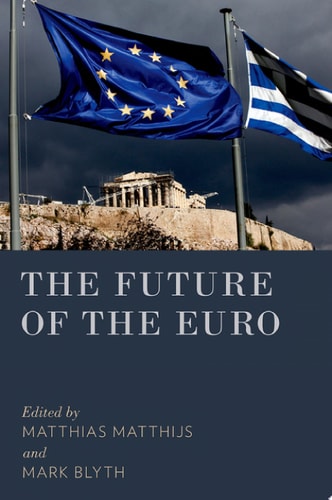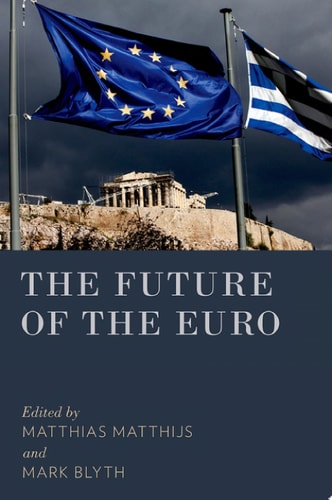
The Future of the Euro
0
0
As an Amazon Associate and affiliate partner, Menrva Books earns from qualifying purchases. Learn more
Author Description
In The Future of the Euro, a group of the world's top political economists analyze the fundamental causes of the euro crisis, determine how it can be fixed, and consider what likely futures lie ahead for the currency. The book makes three interrelated arguments emphasizing the primacy of political over economic factors. First, the original plan for the euro focused on monetary union, but omitted a financial and banking union, mutually supporting institutions of fiscal union and economic government, and a legitimate political union. Second, the euro's unfinished design led to economic divergence-quietly altering the existing distribution of economic and political power within Europe prior to the crisis-which in turn determined the EU's crisis response. The book highlights how the euro's four most important member states-Germany, France, Italy and Spain-each changed once they adopted the euro, why the crisis affected them so differently, and how each has since struggled to live with the commitments the euro necessitates. Third, the book examines three possible "euro futures" through the lens of the politics of its reluctant leader Germany; through the lens of the EU's capacity to move forward through crises; and through the geopolitical lens of the international monetary system. Any successful long-term solution to the euro's predicament will need to start with the political foundations of markets.
Menrva's Summary
THE THESIS
This book investigates the fundamental structural flaws of the euro and the political conditions necessary for its long-term viability. The authors, both established political economists, argue that the euro crisis is primarily a political failure rather than a purely economic one. By examining the institutional design of the currency union, they demonstrate how the absence of fiscal and political integration created divergent economic outcomes among member states. The text posits that any resolution to the current predicament must address the underlying political foundations of European markets.
THE SCOPE MAP
What You Will Find
- Analysis of the institutional design of the euro, specifically the lack of banking and fiscal union.
- Comparative study of the four largest eurozone economies: Germany, France, Italy, and Spain.
- Evaluation of three potential future scenarios for the currency based on geopolitical and institutional capacity.
Scope Limits
- The text does not provide a day-to-day trading manual or investment advice for currency speculators.
- It does not offer a comprehensive history of the European Union prior to the introduction of the euro.
THE AUTHORITY PERSPECTIVE
Experts and political scientists frequently cite this work as a foundational text for understanding the intersection of monetary policy and European political integration. Readers often note the academic density of the prose, which is tailored for those with a background in economics or international policy.
Page Count:
368
Publication Date:
2015-01-01
Publisher:
Oxford University Press
ISBN-10:
0190266449
ISBN-13:
9780190266448
Economics
Finance
Euro
Money & BankingMonetary Theory
European Union
International relations
Public Policy
Europe
Community Tags
Other Editions(2)
Similar Books