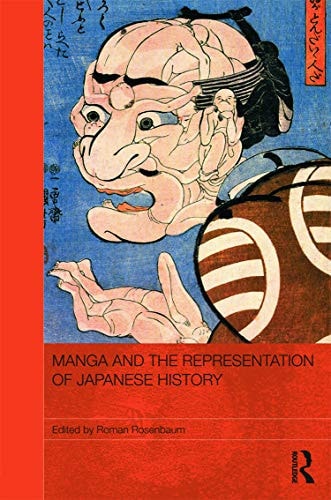
Manga and the representation of Japanese history
0
0
As an Amazon Associate and affiliate partner, Menrva Books earns from qualifying purchases. Learn more
Author Description
This edited collection explores how graphic art and in particular Japanese manga represent Japanese history. The articles explore the representation of history in manga from disciplines that include such diverse fields as literary studies, politics, history, cultural studies, linguistics, narratology, and semiotics. Despite this diversity of approaches all academics from these respective fields of study agree that manga pose a peculiarly contemporary appeal that transcends the limitation imposed by traditional approaches to the study and teaching of history. The representation of history via manga in Japan has a long and controversial historiographical dimension. Thereby manga and by extension graphic art in Japanese culture has become one of the world's most powerful modes of expressing contemporary historical verisimilitude. The strategy of combining the narrative elements of writing with graphic art, the extensive narrative story-manga and its Western equivalent of the graphic novel, reflects the relatively new soft power of 'global' media, which have the potential to display history in previously unimagined ways. Boundaries of space and time in manga become as permeable as societies and cultures across the world. Each of the articles in this book investigates the authorship of history by looking at various different attempts to render Japanese history through the popular cultural media of the story-manga. As Carol Gluck, Tessa Morris-Suzuki, Susan Napier and others have shown, it has never been easy to encapsulate the complex narrative of emperor-based cyclical Japanese historical periods. The contributors to this volume elaborate how manga and by extension graphic art rewrites, reinvents and re-imagines the historicity and dialectic of bygone epochs in postwar/contemporary Japan.
Menrva's Summary
THE THESIS
This collection investigates how Japanese manga functions as a medium for the representation, reinvention, and critical analysis of Japanese history. Editor Roman Rosenbaum compiles a series of academic essays that examine the intersection of graphic art and historiography, drawing on expertise from fields including narratology, political science, and linguistics. The contributors argue that manga provides a unique, contemporary framework for interpreting historical events that traditional academic texts often struggle to capture.
THE SCOPE MAP
What You Will Find
- Analysis of the historiographical dimensions of Japanese graphic art.
- Examination of how manga rewrites and re-imagines specific historical epochs.
- Interdisciplinary perspectives from literary studies, semiotics, and cultural history.
- Case studies on the authorship of history within popular media formats.
THE AUTHORITY PERSPECTIVE
Scholars and students of Japanese media frequently cite this collection as a vital resource for understanding the intersection of popular culture and historical narrative. Experts note the academic rigor of the essays, which successfully bridge the gap between traditional historical study and modern visual media analysis.
Page Count:
273
Publication Date:
2012-01-01
Publisher:
Routledge
ISBN-10:
0203097815
ISBN-13:
9780203097816
Fantasy
Horror
Romance
Historical Fiction
History
Science Fiction
History General
In art
Graphic Novels
Themes motives
Manga
Comic Strips
Literary Criticism
Japan
Art And Society
Community Tags
Other Editions(4)


Similar Books








Reader Comments
Share Your Thoughts
No comments yet. Be the first to share your thoughts!