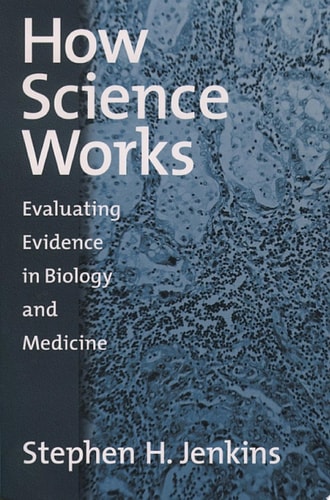
How Science Works: Evaluating Evidence in Biology and Medicine
0
0
As an Amazon Associate and affiliate partner, Menrva Books earns from qualifying purchases. Learn more
Author Description
One week, red wine is good for the heart. The next week, new reports say it's bad for the health. So which is true? Anyone who's ever read science news with fascination, or who's ever been confounded by conflicting stories will appreciate this book. Taking a look at some true to life contemporary news stories, the author assesses recent studies on topics ranging from vitamin C and caffeine to pollution and cancer. With straight talk and a passion for the whole project of science, he demysifies the cult of the expert and sheds light on the nitty-gritty details of scientific processes. Any scientist loves a challenge, but the biggest challenge of all, observes Jenkins, is shared by scientists and nonscientitsts alike: how to make practical decisions in light of ambiguous evidence. Promising no simple answers, this book does offer excellent food for thought for people pondering that next glass of wine.
Menrva's Summary
THE THESIS
This book investigates the core question of how individuals can effectively evaluate conflicting scientific claims and make informed decisions in the face of ambiguous evidence. Stephen H. Jenkins, a scientist with extensive experience in the field, utilizes his background to provide a framework for interpreting biological and medical research. He argues that understanding the scientific process is more valuable than blindly trusting expert consensus, especially when media reports present contradictory findings.
THE SCOPE MAP
What You Will Find
- Analysis of contemporary news stories regarding health and biology
- Case studies on topics including vitamin C, caffeine, pollution, and cancer
- Methodologies for assessing the validity of scientific studies
- Explanations of the nitty-gritty details of scientific processes
Scope Limits
- The text does not provide simple, definitive answers to complex health questions
- It does not serve as a comprehensive medical manual or clinical guide
THE AUTHORITY PERSPECTIVE
Readers frequently note the accessible, straight-talking nature of the prose, which demystifies complex scientific reporting for a general audience. Experts highlight this as a practical resource for those seeking to improve their scientific literacy and critical thinking skills when consuming health news.
Page Count:
237
Publication Date:
2004-01-01
Publisher:
Oxford University Press
ISBN-10:
0190289287
ISBN-13:
9780190289287
Health
Science
Earth Sciences
Scientific Literacy
Biology
Medicine
Medical
Critical thinking
Allied Health
Community Tags
Similar Books