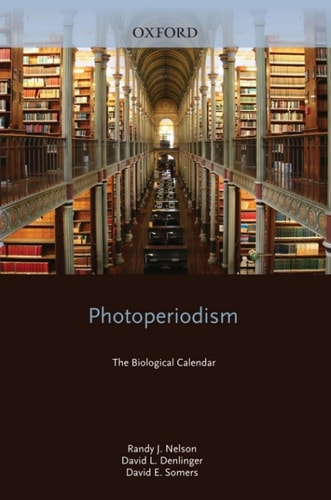
Photoperiodism: The Biological Calendar
0
0
As an Amazon Associate and affiliate partner, Menrva Books earns from qualifying purchases. Learn more
Author Description
Life evolves in a cyclic environment, and to be successful, organisms must adapt not only to their spatial habitat, but also to their temporal habitat. How do plants and animals determine the time of year so they can anticipate seasonal changes in their habitats? In most cases, day length, or photoperiod, acts as the principal external cue for determining seasonal activity. For organisms not living at the bottom of the ocean or deep in a cave, day follows night, and the length of the day changes predictably throughout the year. These changes in photoperiod provide the most accurate signal for predicting upcoming seasonal conditions. Measuring day length allows plants and animals to anticipate and adapt to seasonal changes in their environments in order to optimally time key developmental events including seasonal growth and flowering of plants, annual bouts of reproduction, dormancy and migration in insects, and the collapse and regrowth of the reproductive system that drives breeding seasons in mammals and birds.Although research on photoperiodic time measurement originally integrated work on plants and animals, recent work has focused more narrowly and separately on plants, invertebrates, or vertebrates. As the fields have become more specialized there has been less interaction across the broader field of photoperiodism. As a result, researchers in each area often needlessly repeat both theoretical and experimental work. For example, understanding that there are genetically distinct morphs among species that, depending on latitude, respond to different critical photoperiods was discovered separately in plants, invertebrates, and vertebrates over the course of 20 years. However, over the past decade, intense work on daily and seasonal rhythms in fruit flies, mustard plants, and hamsters and mice, has led to remarkable progress in understanding the phenomenology, as well as the molecular and genetic mechanisms underlying circadian rhythms and clocks. This book was d
Menrva's Summary
THE THESIS
This text investigates the biological mechanisms by which organisms utilize photoperiodism to synchronize developmental and reproductive cycles with seasonal environmental shifts. The authors, experts in chronobiology and physiology, synthesize research across plant and animal kingdoms to argue for a unified understanding of temporal adaptation. By examining the molecular and genetic underpinnings of circadian rhythms, the book provides a comprehensive framework for how diverse species anticipate and respond to predictable annual changes in day length.
THE SCOPE MAP
What You Will Find
- Comparative analysis of photoperiodic responses in plants, invertebrates, and vertebrates.
- Molecular and genetic mechanisms governing circadian clocks and seasonal timing.
- Examination of phenotypic plasticity and genetically distinct morphs across varying latitudes.
- Discussion of key biological events including flowering, migration, dormancy, and reproductive cycles.
THE AUTHORITY PERSPECTIVE
Experts recognize this work as a significant effort to bridge the gap between specialized research fields that have historically operated in isolation. Readers frequently note the academic density of the prose, which serves as a foundational resource for students and researchers interested in the intersection of genetics and environmental biology.
Page Count:
600
Publication Date:
2010-01-01
Publisher:
Oxford University Press
ISBN-10:
0199714630
ISBN-13:
9780199714636
Science
Medical
Earth Sciences
Zoology
Botany
Photoperiodism
Ecology
Biology
Physiology
Genetics
Allied Health
Community Tags
Similar Books






![Insect hormones, (University reviews in biology [12])](https://storage.googleapis.com/menrva_img_storage/covers/9780050022917.jpg)





Reader Comments
Share Your Thoughts
No comments yet. Be the first to share your thoughts!