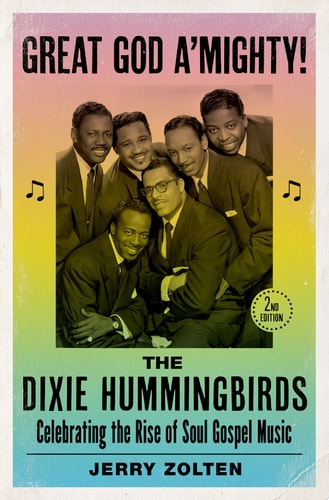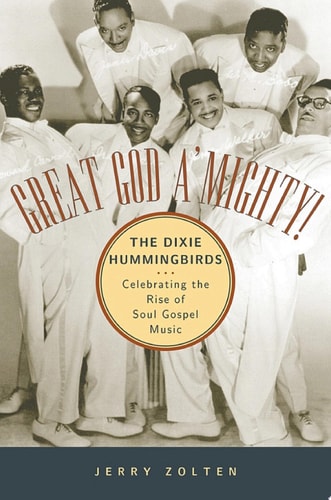
Great God A'Mighty! The Dixie Hummingbirds: Celebrating the Rise of Soul Gospel Music
0
0
As an Amazon Associate and affiliate partner, Menrva Books earns from qualifying purchases. Learn more
Author Description
From the Jim Crow world of 1920s Greenville, South Carolina, to Greenwich Village's Café Society in the '40s, to their 1974 Grammy-winning collaboration on "Loves Me Like a Rock," the Dixie Hummingbirds have been one of gospel's most durable and inspiring groups. Now, Jerry Zolten tells the Hummingbirds' fascinating story and with it the story of a changing music industry and a changing nation. When James Davis and his high-school friends starting singing together in a rural South Carolina church they could not have foreseen the road that was about to unfold before them. They began a ten-year jaunt of "wildcatting," traveling from town to town, working local radio stations, schools, and churches, struggling to make a name for themselves. By 1939 the a cappella singers were recording their four-part harmony spirituals on the prestigious Decca label. By 1942 they had moved north to Philadelphia and then New York where, backed by Lester Young's band, they regularly brought the house down at the city's first integrated nightclub, Café Society. From there the group rode a wave of popularity that would propel them to nation-wide tours, major record contracts, collaborations with Stevie Wonder and Paul Simon, and a career still vibrant today as they approach their seventy-fifth anniversary. Drawing generously on interviews with Hank Ballard, Otis Williams, and other artists who worked with the Hummingbirds, as well as with members James Davis, Ira Tucker, Howard Carroll, and many others, The Dixie Hummingbirds brings vividly to life the growth of a gospel group and of gospel music itself.
Menrva's Summary
THE THESIS
This book investigates the historical trajectory of the Dixie Hummingbirds to illustrate the evolution of soul gospel music and its broader impact on the American music industry. Jerry Zolten, a music historian and professor, utilizes extensive primary source interviews and archival research to document the group's transition from rural South Carolina churches to national prominence. The work argues that the Hummingbirds' career serves as a microcosm for the integration of gospel aesthetics into mainstream popular music throughout the twentieth century.
THE SCOPE MAP
What You Will Find
- A chronological history of the Dixie Hummingbirds from the 1920s to the early 2000s.
- Analysis of the transition from a cappella spirituals to soul-influenced gospel arrangements.
- Primary source interviews with group members James Davis, Ira Tucker, and Howard Carroll.
- Contextual data regarding the influence of the Jim Crow era on touring musicians.
Scope Limits
- The text does not provide a comprehensive discography or technical musicological analysis of every recorded track.
- It does not focus on the personal lives of the members outside of their professional musical contributions.
THE AUTHORITY PERSPECTIVE
Critics and music historians frequently cite this work as a definitive account of the gospel quartet tradition. Scholars note the author's meticulous use of oral history to bridge the gap between regional religious music and the commercial recording industry.
Page Count:
384
Publication Date:
2003-01-01
Publisher:
Oxford University Press
ISBN-10:
0190288302
ISBN-13:
9780190288303
Biography
Non-Fiction
Biography Autobiography
African American
Music History
Gospel Music
English
Cultural History
Musicians
Humanities
English & College Success