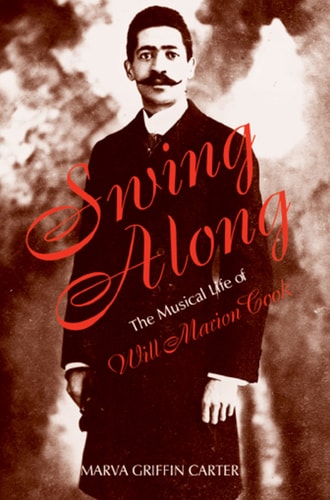
Swing Along: The Musical Life of Will Marion Cook
0
0
As an Amazon Associate and affiliate partner, Menrva Books earns from qualifying purchases. Learn more
Author Description
Renowned today as a prominent African-American in Music Theater and the Arts community, composer, conductor, and violinist Will Marion Cook was a key figure in the development of American music from the 1890s to the 1920s. In this insightful biography, Marva Griffin Carter offers the first definitive look at this pivotal life's story, drawing on both Cook's unfinished autobiography and his wife Abbie's memoir. A violin virtuoso, Cook studied at Oberlin College (his parents' alma mater), Berlin's Hochschule für Musik with Joseph Joachim, and New York's national Conservatory of Music with Antonin Dvorak. Cook wrote music for a now-lost production of Uncle Tom's Cabin for the Chicago World's Fair of 1893, and then devoted the majority of his career to black musical comedies due to limited opportunities available to him as a black composer. He was instrumental in showcasing his Southern Syncopated Orchestra in the prominent concert halls of the Unites States and Europe, even featuring New Orleans clarinetist Sidney Bechet, who later introduced European audiences to authentic blues. Once mentored by Frederick Douglas, Will Marion Cook went on to mentor Duke Ellington, paving the path for orchestral concert jazz. Through interpretive and musical analyses, Carter traces Cook's successful evolution from minstrelsy to musical theater. Written with his collaborator, the distinguished poet Paul Lawrence Dunbar, Cook's musicals infused American Musical Theater with African-American music, consequently altering the direction of American popular music. Cook's In Dahomey, hailed by Gerald Bordman as "one of the most important events in American Musical Theater history," was the first full-length Broadway musical to be written and performed by blacks. Alongside his accomplishments, Carter reveals Cook's contentious side- a man known for his aggressiveness, pride, and constant quarrels, who became his own worst enemy in regards to his career. Carter further sets Cook's life against
Menrva's Summary
THE THESIS
This biography investigates how Will Marion Cook navigated the racial constraints of the late 19th and early 20th centuries to fundamentally reshape American musical theater and jazz. Marva Griffin Carter, a scholar of American music, utilizes primary source documents including Cook's unfinished autobiography and his wife Abbie's memoirs to construct this narrative. The text argues that Cook's transition from classical violin training to the development of black musical comedy provided the structural foundation for modern American popular music. Carter balances this professional analysis with a candid examination of Cook's volatile personality and the systemic barriers that limited his career trajectory.
THE SCOPE MAP
What You Will Find
- Detailed examination of Cook's education at Oberlin, the Hochschule für Musik, and the National Conservatory of Music.
- Analysis of the evolution from minstrelsy to the Broadway production of In Dahomey.
- Documentation of the Southern Syncopated Orchestra and its influence on European jazz audiences.
- Interpretive musical analyses of Cook's compositions and collaborations with Paul Laurence Dunbar.
Scope Limits
- The text does not provide an exhaustive discography of every minor composition.
- The narrative focus remains primarily on Cook's professional life and artistic contributions rather than his private domestic life outside of his marriage.
THE AUTHORITY PERSPECTIVE
Scholars and music historians recognize this work as the definitive biographical account of Will Marion Cook's career. Readers frequently note the academic rigor of the prose and the depth of the archival research presented by the author.
Page Count:
194
Publication Date:
2008-01-01
Publisher:
Oxford University Press
ISBN-10:
0190283122
ISBN-13:
9780190283124
Biography
English
English & College Success
African American
Humanities
Theater History
Music History
Jazz History
Biography Autobiography
Composers
Community Tags
Similar Books