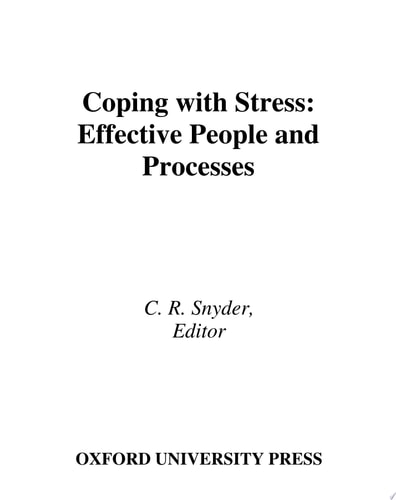
Coping with Stress: Effective People and Processes
0
0
As an Amazon Associate and affiliate partner, Menrva Books earns from qualifying purchases. Learn more
Author Description
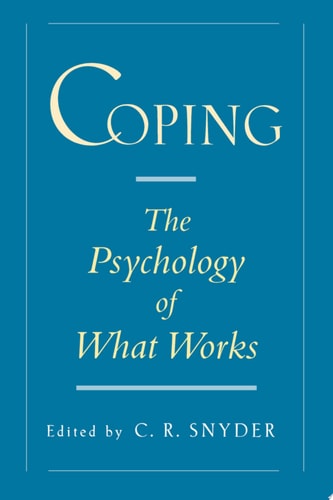
This is a companion volume to Coping: The Psychology of What Works, which is also edited by Snyder. This second book includes chapters by some of the most well known clinical and health psychologists and covers some of the newest and most provocative topics currently under study in the area of coping. The contributors address the key questions in this literature: Why do some of us learn from hardship and life's stressors? And why do others fail and succumb to depression, anxiety, and even suicide? What are the adaptive patterns and behaviors of those who do well in spite of the obstacles that are thrown their way? The chapters will look at exercise as a way of coping with stress, body imaging, the use of humor, forgiveness, control of hostile thoughts, ethnicity and coping, sexism and coping aging and relationships, constructing a coherent life story, personal spirituality, and personal growth.
Menrva's Summary
THE THESIS
This volume investigates the psychological mechanisms and behavioral patterns that enable individuals to successfully navigate life stressors while avoiding the negative outcomes of depression and anxiety. Edited by Charles R. Snyder, the text compiles research from prominent clinical and health psychologists to examine why certain individuals demonstrate resilience in the face of adversity. The contributors utilize empirical data and clinical observation to construct a framework for understanding adaptive coping strategies.
THE SCOPE MAP
What You Will Find
- Analysis of behavioral interventions including exercise, humor, and forgiveness.
- Examination of social and identity-based factors such as ethnicity, sexism, and aging.
- Exploration of cognitive and spiritual strategies like body imaging and personal narrative construction.
Scope Limits
- The text focuses primarily on psychological and behavioral coping mechanisms rather than pharmacological interventions.
- It does not provide a singular, universal clinical treatment protocol but rather a collection of diverse research perspectives.
THE AUTHORITY PERSPECTIVE
Experts recognize this volume as a significant companion to broader literature on resilience and positive psychology. Readers frequently note the academic density of the prose, which serves as a resource for students and practitioners interested in the clinical study of human adaptation.
Page Count:
317
Publication Date:
2001-01-01
Publisher:
Oxford University Press
ISBN-10:
0190284811
ISBN-13:
9780190284817
Psychology
Health
Personality
Self Help
Mental Health
Introduction to Social WorkWelfare
Community Tags
Similar Books