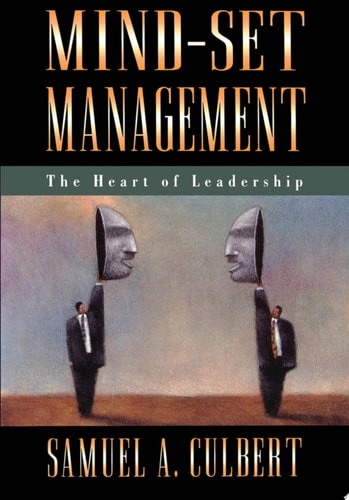
Mind-Set Management: The Heart of Leadership
0
0
As an Amazon Associate and affiliate partner, Menrva Books earns from qualifying purchases. Learn more
Author Description
You can follow any business guru you want, be it Peter Drucker or Tom Peters. You can adopt any new management concept, from reengineering to "empowering people." But Samuel A. Culbert has one caveat: no matter what managerial "religion" you choose--and there are many sound ones--before you can lead, manage, or team up effectively, you must comprehend the mind-sets that direct the people with whom you are interacting. In Mind-Set Management, Culbert provides a model for thinking about other people--about their self-interested motives and about their biased views of work events--as he shows managers at all levels how to use psychology instead of manipulation in giving valid, even great, advice. The essence of leading and managing, says Culbert, is "staging the conditions for others to be effective," which today entails giving advice and feedback, not issuing directives. This is particularly true with today's "empowering" management styles. But, as most managers know all too well, advice is often resisted, resented, and ignored. The problem, Culbert contends, is that managers don't have the other person in focus: When they formulate advice, they think they are attuned to the other person, but in fact the person they have listened to most is themselves. Mind-Set Management will help you focus on the person you want to advise, explaining what you need to learn and to know in order to give advice that is great because it is advice that actually gets used. It will prompt you to ask yourself (and will help you answer) such questions as: Why do people insist on seeing events with their own particular biases and distortions? Why do they resist my best ideas and advice about how they can function most effectively? Why can't I get people to change how they reason and think? Why do people have so much difficulty putting internal politics aside? What's needed for people to trust one another and listen to advice? Why are some people blind to the obvious logic behind the feedback
Menrva's Summary
THE THESIS
How can managers effectively influence and advise others by shifting their focus from personal bias to the specific mind-sets of their colleagues? Samuel A. Culbert, a professor at UCLA's Anderson School of Management, utilizes his expertise in organizational psychology to argue that traditional management directives often fail because they ignore the internal motivations and cognitive distortions of the recipient. The book presents a framework for understanding these individual mind-sets, proposing that true leadership involves creating conditions for others to succeed rather than imposing top-down control.
THE SCOPE MAP
What You Will Find
- A psychological model for analyzing the self-interested motives of employees
- Strategies for providing feedback that is actually accepted and implemented
- Techniques for identifying and mitigating personal biases during interpersonal interactions
Scope Limits
- The text does not provide a comprehensive guide to corporate finance or operational strategy
- It focuses primarily on interpersonal management rather than broad organizational restructuring
THE AUTHORITY PERSPECTIVE
Management professionals frequently cite this work as a practical resource for navigating complex office dynamics and improving communication. Experts highlight the book's focus on psychological awareness as a necessary departure from standard, directive-based leadership manuals.
Page Count:
354
Publication Date:
1996-01-01
Publisher:
Oxford University Press
ISBN-10:
0190282673
ISBN-13:
9780190282677
Business
Management
Leadership
Psychology Industrial
Principles of Management
Professional Development
Community Tags
Similar Books