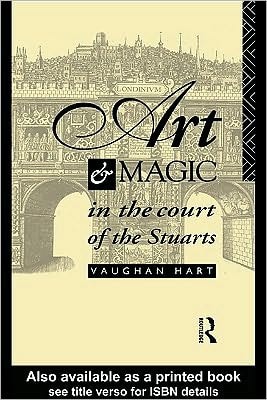
Art and Magic in the Court of the Stuarts
0
0
As an Amazon Associate and affiliate partner, Menrva Books earns from qualifying purchases. Learn more
Author Description
Spanning from the inauguration of James I in 1603 to the execution of Charles I in 1649, the Stuart court saw the emergence of a full expression of Renaissance culture in Britain. Hart examines the influence of magic on Renaissance art and how in its role as an element of royal propaganda, art was used to represent the power of the monarch and reflect his apparent command over the hidden forces of nature. Court artists sought to represent magic as an expression of the Stuart Kings' divine right, and later of their policy of Absolutism, through masques, sermons, heraldry, gardens, architecture and processions. As such, magic of the kind enshrined in Neoplatonic philosophy and the court art which expressed its cosmology, played their part in the complex causes of the Civil War and the destruction of the Stuart image which followed in its wake.
Menrva's Summary
THE THESIS
This book investigates how the Stuart court utilized the intersection of Renaissance art and Neoplatonic magic to construct and project the image of royal authority. Vaughan Hart, an expert in architectural history, analyzes the period between 1603 and 1649 to demonstrate how the monarchy employed visual and performance arts as political propaganda. By examining the symbolic language of masques, architecture, and heraldry, the author argues that the Stuart kings attempted to manifest their divine right through the manipulation of hidden natural forces. This framework reveals how the aesthetic representation of power became inextricably linked to the political tensions that ultimately culminated in the English Civil War.
THE SCOPE MAP
What You Will Find
- An analysis of the Stuart court from the reign of James I to the execution of Charles I.
- Examination of Neoplatonic philosophy as a tool for royal political legitimacy.
- Case studies of court masques, architectural projects, and royal processions.
- Exploration of how artistic propaganda contributed to the collapse of the Stuart monarchy.
THE AUTHORITY PERSPECTIVE
Scholars and historians recognize this work as a significant contribution to the study of early modern political iconography and the intersection of art and statecraft. Readers frequently note the academic density of the prose, which provides a rigorous examination of how visual culture functioned within the specific political climate of the seventeenth century.
Page Count:
280
Publication Date:
2002-01-01
Publisher:
Taylor & Francis Group
ISBN-10:
0203200780
ISBN-13:
9780203200780
History
Néo-platonisme
Political History
Influence
Art History
Stuart Art
Art Patronage
Magie
Neo-Platonism
British History
Magic
Dans lart
Allegory artistic device
Performance
House of Stuart
Macht
Art British
Reference
Neoplatonism
Stuart House of
Nonfiction
Renaissance
Allegories
Mécénat
Kunst
Art Stuart
Community Tags
Other Editions(4)


Similar Books