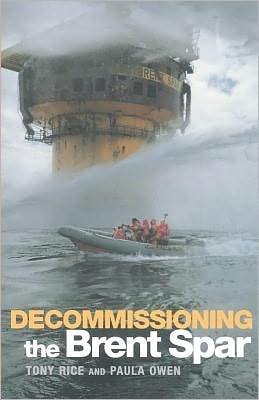
Decommissioning the Brent Spar
0
0
As an Amazon Associate and affiliate partner, Menrva Books earns from qualifying purchases. Learn more
Author Description
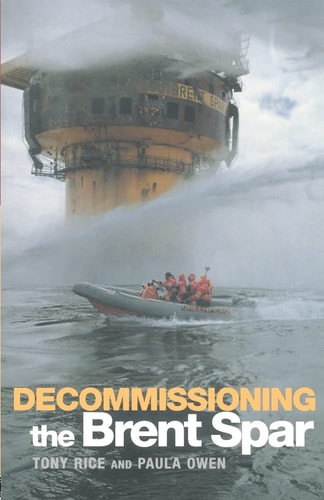
In 1995 the giant oil company Shell obtained a UK Government licence to dispose of the redundant oil storage and off-loading platform, Brent Spar, by sinking it in the deep North Atlantic. The Greenpeace occupation of the Spar in May 1995 in protest against this plan, and the resulting controversy leading to Shell's capitulation in late June, dominated the news media, not only in Britain and Europe, but around the world. It was to be a further three years before the UK government issued a licence for the final disposal of the Spar, this time involving its re-use in a quay extension in Norway. In the meantime the Brent Spar affair had had significant effects on the commercial world, government and environmental groups and was widely seen as a victory for common sense and the environment over the vested interest of big business. But there was, and still is, a great deal of confusion surrounding the Spar, with claims and counterclaims from all sides about the rights and wrongs of the situation, and even the facts. This book examines the background to the story, what Shell did to obtain the original deep-sea disposal licence, what happened at the height of the controversy, and the subsequent developments leading to the final disposal option. It explains how the misinformation and confusion arose and identifies serious deficiencies in the Best Practicable Environmental Option process, the system used in the UK to determine the fate of potentially environmentally damaging waste. It concludes that serious errors were made by all organisations directly involved, including the government, Shell and Greenpeace. However, the overall result should be positive if, as a result of these errors, the system is improved and the same types of mistakes are not made in relation to future 'Brent Spars'.
Menrva's Summary
THE THESIS
This book investigates the systemic failures and misinformation surrounding the 1995 disposal of the Brent Spar oil platform to determine how environmental policy and corporate decision-making went awry. Authors Paula Owen and Tony Rice utilize their expertise to dissect the complex interactions between Shell, the UK government, and Greenpeace. They argue that the controversy was not merely a clash of interests but a symptom of deep-seated deficiencies in the Best Practicable Environmental Option process, ultimately calling for structural improvements to prevent future mismanagement of industrial waste.
THE SCOPE MAP
What You Will Find
- A detailed chronological account of the 1995 Brent Spar occupation and the subsequent international media controversy.
- An analysis of the Best Practicable Environmental Option (BPEO) framework and its operational failures.
- Examination of the conflicting claims and misinformation propagated by Shell, government bodies, and environmental activists.
- A review of the final disposal resolution involving the platform's re-use in a Norwegian quay extension.
THE AUTHORITY PERSPECTIVE
Experts and readers recognize this work as a critical post-mortem of a landmark environmental conflict. The text is noted for its objective assessment of the errors committed by all parties involved, providing a balanced view of a highly polarized event.
Page Count:
192
Publication Date:
1999-01-01
Publisher:
Taylor & Francis Group
ISBN-10:
0203222059
ISBN-13:
9780203222058
History
Politics
Business
Energy Industry
Community Tags
Other Editions(2)
Similar Books




Reader Comments
Share Your Thoughts
No comments yet. Be the first to share your thoughts!