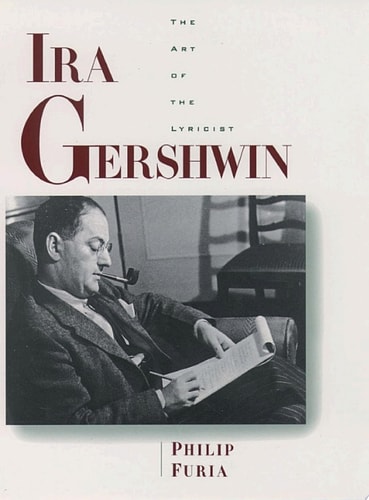
Ira Gershwin: The Art of the Lyricist
0
0
As an Amazon Associate and affiliate partner, Menrva Books earns from qualifying purchases. Learn more
Author Description
To the perennial question "which comes first, the music or the words?" Ira Gershwin always responded, "the contract." The jest reveals both Ira's consummate professionalism and the self-effacing wit with which he ducked the spotlight whenever possible. Yet the ingeniously inventive melodies George Gershwin composed for such classic songs as "Someone to Watch Over Me," "Embraceable You," "Fascinating Rhythm," "It Ain't Necessarily So," and "Love is Here to Stay" live on in no small part because of the equally unforgettable lyrics of Ira Gershwin, lines crafted with a precision that earned him the sobriquet "The Jeweller" among his Broadway peers. In Ira Gershwin: The Art of the Lyricist, the older and less flamboyant of the Gershwin brothers at last steps out of the shadows to claim his due as one of American songwriting's most important and enduring innovators. Philip Furia traces the development of Ira Gershwin's lyrical art from his early love of light verse and Gilbert and Sullivan, through his apprentice work in Tin Pan Alley, to his emergence as a prominent writer for the Broadway musical theater in the 1920s. Furia illuminates his work in satirical operettas such as Of Thee I Sing and Strike Up the Band, the smart "little" revues of the 1930s, and his contributions to the opera Porgy and Bess. After describing the Gershwin brothers' brief but brilliant work in Hollywood before George's sudden death—work that produced such classics as "They Can't Take That Away From Me" and "Let's Call the Whole Thing Off"—Furia follows Ira's career through such triumphs as Lady in the Dark with Kurt Weill, Cover Girl with Jerome Kern, and A Star is Born, with Harold Arlen. Along the way, Furia provides much insight into the art of the lyricist and he captures the magic of a golden era when not only the Gershwins, but Irving Berlin, Cole Porter, Jerome Kern, Oscar Hammerstein II, Gertrude Lawrence, Fred Astaire, and other luminaries made the lights of Broadway and the Hollywood.
Menrva's Summary
THE THESIS
This work investigates how Ira Gershwin transformed the craft of the American lyricist through technical precision and a unique synthesis of vernacular wit and sophisticated wordplay. Philip Furia, a scholar of American popular song, utilizes archival materials and song analysis to position Ira as an essential innovator rather than merely the secondary partner to his brother George. The book argues that Ira's meticulous approach to rhythm and rhyme provided the necessary structural foundation for the enduring success of the Great American Songbook.
THE SCOPE MAP
What You Will Find
- A chronological examination of Ira Gershwin's career from Tin Pan Alley to Hollywood.
- Technical analysis of lyrical construction in songs like "Someone to Watch Over Me" and "Embraceable You."
- Contextual history of Broadway productions including Of Thee I Sing and Porgy and Bess.
- Biographical details regarding collaborations with Kurt Weill, Jerome Kern, and Harold Arlen.
Scope Limits
- The text does not provide a comprehensive biography of George Gershwin, focusing primarily on Ira's professional output.
- It does not offer a technical musicological analysis of the compositions themselves, prioritizing the lyrical craft.
THE AUTHORITY PERSPECTIVE
Critics and music historians frequently cite this work as the definitive study of Ira Gershwin's specific contributions to musical theater. Readers often note the accessible yet scholarly tone that balances technical lyrical analysis with engaging historical narrative.
Page Count:
286
Publication Date:
1997-01-01
Publisher:
Oxford University Press
ISBN-10:
0190283386
ISBN-13:
9780190283384
History
Music
Non-Fiction
Biography
English & College Success
Songwriting
Lyricists
Humanities
English
Theater
Biography Autobiography
Community Tags
Other Editions(3)


Similar Books













Reader Comments
Share Your Thoughts
No comments yet. Be the first to share your thoughts!