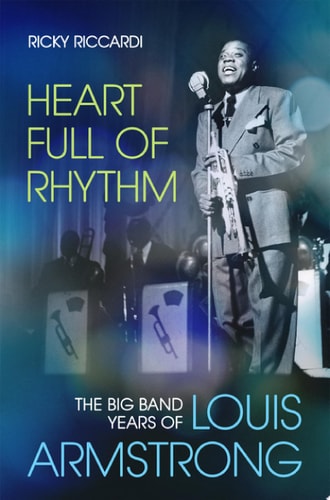
Heart Full of Rhythm: The Big Band Years of Louis Armstrong
0
0
As an Amazon Associate and affiliate partner, Menrva Books earns from qualifying purchases. Learn more
Author Description
Nearly 50 years after his death, Louis Armstrong remains one of the 20th century's most iconic figures. Popular fans still appreciate his later hits such as "Hello, Dolly!" and "What a Wonderful World," while in the jazz community, he remains venerated for his groundbreaking innovations in the 1920s. The achievements of Armstrong's middle years, however, possess some of the trumpeter's most scintillating and career-defining stories. But the story of this crucial time has never been told in depth — until now. Between 1929 and 1947, Armstrong transformed himself from a little-known trumpeter in Chicago to an internationally renowned pop star, setting in motion the innovations of the Swing Era and Bebop. He had a similar effect on the art of American pop singing, waxing some of his most identifiable hits such as "Jeepers Creepers" and "When You're Smiling." However as author Ricky Riccardi shows, this transformative era wasn't without its problems, from racist performance reviews and being held up at gunpoint by gangsters to struggling with an overworked embouchure and getting arrested for marijuana possession. Utilizing a prodigious amount of new research, Riccardi traces Armstrong's mid-career fall from grace and dramatic resurgence. Featuring never-before-published photographs and stories culled from Armstrong's personal archives, Heart Full of Rhythm tells the story of how the man called "Pops" became the first "King of Pop."
Menrva's Summary
THE THESIS
This book investigates the pivotal yet overlooked middle period of Louis Armstrong's career, specifically how he evolved from a regional jazz musician into an international pop icon between 1929 and 1947. Author Ricky Riccardi, a recognized expert on Armstrong and director of research collections at the Louis Armstrong House Museum, utilizes extensive primary source material from the musician's personal archives. The text argues that this era was not merely a transition but a period of profound artistic and professional transformation that defined the trajectory of the Swing Era and American popular music.
THE SCOPE MAP
What You Will Find
- Detailed analysis of Armstrong's career trajectory from 1929 to 1947.
- Examination of the development of the Swing Era and Bebop influences.
- Insights into the evolution of American pop singing techniques.
- Never-before-published photographs and archival anecdotes.
Scope Limits
- The book does not focus on Armstrong's early 1920s innovations or his final years in the late 20th century.
- It does not provide a comprehensive life-long biography, focusing strictly on the mid-career timeframe.
THE AUTHORITY PERSPECTIVE
Experts and jazz historians frequently cite this work as a definitive account of a previously under-examined period in Armstrong's life. Readers often note the high level of archival detail and the author's ability to balance technical musical analysis with compelling biographical narrative.
Page Count:
424
Publication Date:
2020-01-01
Publisher:
Oxford University Press
ISBN-10:
0190914130
ISBN-13:
9780190914134
Music
Non-Fiction
History
Biography
English & College Success
Criticism history
Biography Autobiography
American History
Jazz
Humanities
English
Community Tags
Similar Books