Protein Engineering for Industrial Biotechnology
Author Description
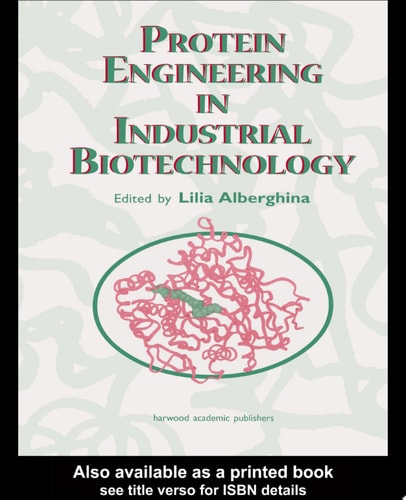
Protein engineering has proved to be one of the more fruitful technological approaches in biotechnology, being both very powerful and able to generate valuable intellectual property. This book aims to present examples in which the application of protein engineering has successfully solved problems arising in industrial biotechnology. There is a section on its use to enhance purification of recombinant proteins. The use of protein engineering to modify the activity or the stability of industrial enzymes from lipases to proteases, from carboxypeptidases to glucanases and glucosidases, and from pectin modifying enzymes to enzymes able to degrade recalcitrant compounds is extensively covered. It is shown how areas as diverse as agrofood technology, fine chemistry, detergents, bioremediation and biosensors receive significant contributions from protein and solvent engineering. The application of protein engineering to health care is also covered, from the development of new vaccines to new potential therapeutic proteins. A specific notation is given to protein engineering in the development of target molecules for drug discovery. International in scope, the many contributions are drawn from academia and industry. The text should be of interest to students and researchers in industrial biotechnology as well as to everybody interested in basic research in protein structure, molecular genetics, bio-organic chemistry, biochemistry, agrobiotechnology, pharmaceutical sciences and medicine.
Menrva's Summary
THE THESIS
This book investigates how protein engineering serves as a critical technological framework for solving complex challenges within industrial biotechnology. Edited by Lilia Alberghina, the text compiles contributions from academic and industrial experts to demonstrate the practical application of protein modification. It argues that engineering protein structure and stability is a primary driver for innovation in sectors ranging from agrofood technology to pharmaceutical development.
THE SCOPE MAP
What You Will Find
- Methodologies for enhancing the purification of recombinant proteins.
- Modification techniques for industrial enzymes such as lipases, proteases, and glucanases.
- Applications in diverse fields including bioremediation, biosensors, and fine chemistry.
- Strategies for developing target molecules in drug discovery and therapeutic protein design.
THE AUTHORITY PERSPECTIVE
Experts identify this volume as a comprehensive reference for researchers and students navigating the intersection of molecular genetics and industrial application. Readers frequently note the technical density of the contributions, which provide a bridge between basic protein structure research and commercial biotechnology implementation.
Page Count:
388
Publication Date:
2000-01-01
Publisher:
Taylor & Francis, Inc.
ISBN-10:
0203303709
ISBN-13:
9780203303702
Science
Engineering
Chemistry
Biochemistry
Biotechnology
Community Tags
Similar Books