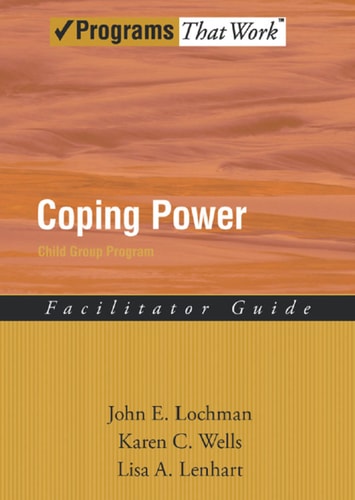
Coping Power: Child Group Facilitator's Guide
0
0
As an Amazon Associate and affiliate partner, Menrva Books earns from qualifying purchases. Learn more
Author Description
The Coping Power Program is designed for use with preadolescent and early adolescent aggressive children and their parents and is often delivered near the time of children's transition to middle school. Aggression is one of the most stable problem behaviors in childhood. If not dealt with effectively, it can lead to negative outcomes in adolescence such as drug and alcohol use, truancy and dropout, delinquency, and violence. This program has proven effective in helping to avoid these types of problems.The parent component of the program consists of 16 group meetings also held during the 5th and 6th grade school years. Parents are taught ways of reinforcing their children's positive behaviors, as well as effective discipline techniques for eliminating negative behaviors. Skills for improving family communication, providing academic support in the home, and building family cohesion are also a focus. Parents also learn how to give effective instructions and establish age-appropriate rules and expectations for their children at home. In addition to these basic parenting skills, the program describes relaxation techniques that parents can use to deal with their own stress. Tips for taking care of personal needs and effective time management strategies also help to ease the challenges of parenting an aggressive child.
Menrva's Summary
THE THESIS
This guide investigates the efficacy of the Coping Power Program in mitigating aggressive behaviors in preadolescent and early adolescent children through structured group interventions. Authors John E. Lochman, Karen C. Wells, and Lisa provide a clinical framework designed for facilitators to implement during the critical transition period into middle school. The program utilizes evidence-based behavioral strategies to address long-term risks such as delinquency, substance use, and academic failure by targeting both child behavior and parental management techniques.
THE SCOPE MAP
What You Will Find
- A 16-session curriculum for parent group meetings
- Behavioral reinforcement and discipline methodologies
- Strategies for improving family communication and cohesion
- Academic support techniques for home environments
- Stress management and self-care protocols for parents
Scope Limits
- The guide focuses specifically on the parent component of the program
- It does not cover the child-specific group session curriculum in detail
- The material is limited to the 5th and 6th grade developmental window
THE AUTHORITY PERSPECTIVE
Clinicians and school counselors frequently identify this manual as a standard resource for managing childhood aggression within educational and therapeutic settings. Experts highlight the structured, modular nature of the program as a primary benefit for facilitators working with high-risk populations.
Page Count:
288
Publication Date:
2008-01-01
Publisher:
Oxford University Press
ISBN-10:
0190296291
ISBN-13:
9780190296292
Psychology
Parenting
Social Work
Mental Health
Education
Community Tags
Similar Books