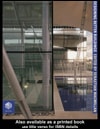
Designing Better Buildings
0
0
As an Amazon Associate and affiliate partner, Menrva Books earns from qualifying purchases. Learn more
Author Description
Design is widely recognised as the key to improving the quality of the built environment. This well-illustrated book comprises 15 chapters written by leading practitioners, clients, academics and other experts, and presents the latest thinking on what design quality is and how to achieve it. For design practitioners and their clients alike, the book provides evidence to justify greater focus on, and investment in, design. It summarises the benefits that arise from good design - such as, civic pride in the urban environment, the stimulation of urban regeneration, corporate identity, occupant productivity and health in offices, improved learning outcomes in schools, better patient recovery rates in hospitals, as well as reduced environmental impact. And it illustrates these benefits through case study examples.Eight chapters focus on case studies of exemplary buildings in particular sectors - offices, schools, housing, and hospitals - and explain why and how they came to be designed, and the design qualities they exhibit. Jon Rouseof CABE offers ten case studies where organisations have deliberately invested in their buildings to demonstrate their belief in good design, as well as to raise their profile and improve staff recruitment and retention. Richard Feilden of Feilden Clegg Bradley presents some exemplary schools and identifies the key factors they share. Terry Wyatt of Hoare Lea & Partners describes the design of three office buildings where concerns for staff comfort, productivity and well-being were used to decide where and what to build. Dickon Robinson of the Peabody Trust uses three affordable-housing projects to show how a bespoke design-led approach extracts the full potential of a site and contributes to a lasting legacy of attractive housing. Paul Wheeler of DEGW discusses the development of the Housing Quality Indicators. Matthew Carmona of University College London examines six urban design projects and identifies the principles that appear to correl
Menrva's Summary
THE THESIS
This book investigates the critical relationship between high-quality architectural design and the tangible socio-economic, health, and environmental benefits it provides to the built environment. Author Sebastian Macmillan compiles insights from a diverse group of practitioners, clients, and academics to establish a framework for understanding design quality. By synthesizing expert perspectives and empirical evidence, the text argues that intentional investment in design is a strategic necessity rather than an aesthetic luxury. The work aims to provide both practitioners and clients with the justification required to prioritize design excellence in future development projects.
THE SCOPE MAP
What You Will Find
- Analysis of design impacts on occupant productivity, health, and learning outcomes.
- Sector-specific case studies covering offices, schools, housing, and hospitals.
- Methodologies for evaluating design quality through Housing Quality Indicators.
- Evidence-based arguments for the long-term value of urban regeneration and environmental sustainability.
THE AUTHORITY PERSPECTIVE
Experts and practitioners in the field of architecture frequently cite this work as a foundational resource for understanding the practical value of design-led development. Readers often note that the text successfully bridges the gap between academic theory and real-world application through its detailed case studies.
Page Count:
220
Publication Date:
2004-01-01
Publisher:
Taylor & Francis Group Plc
ISBN-10:
0203337077
ISBN-13:
9780203337073
Architecture
Professional Development
Nonfiction
Urban Design
Construction
Sustainability
Community Tags
Other Editions(2)

Similar Books










Reader Comments
Share Your Thoughts
No comments yet. Be the first to share your thoughts!