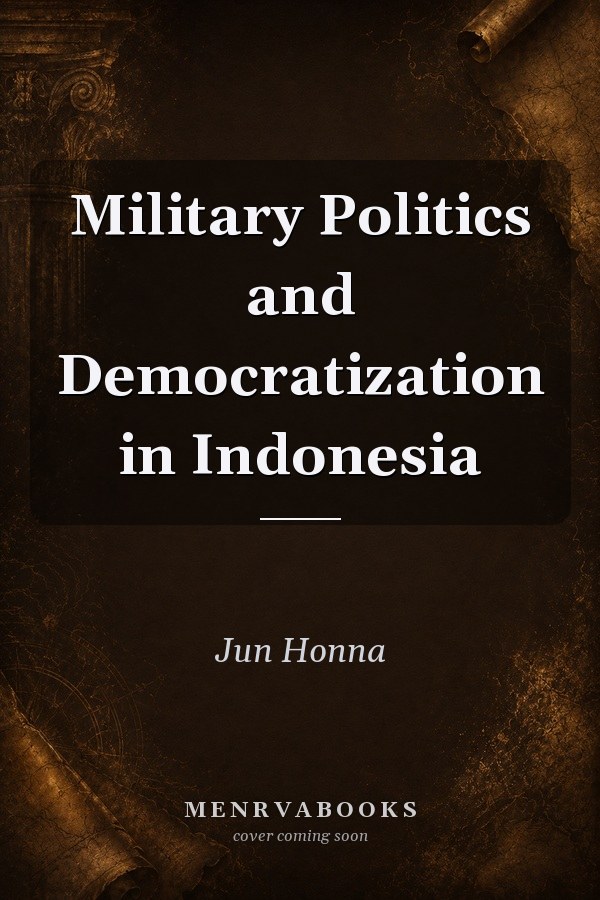
Military Politics and Democratization in Indonesia
0
0
As an Amazon Associate and affiliate partner, Menrva Books earns from qualifying purchases. Learn more
Author Description
The military has been a powerful political player in Indonesia, and played a key role in its recent history. It was the dominant power under Soeharto's authoritarian regime and continues to influence post-Soeharto civilian rule. Understanding the dynamics of military politics is essential to understanding the nature and prospects of Indonesia's transition to democracy. Jun Honna reveals how politics among generals shaped the direction of military adaptation to democratic challenge during the late Soeharto era and the succeeding two civilian governments, led by presidents B.J. Habibie and Abdurrahman Wahid. Drawing on military documents and interviews with key military figures, Honna depicts the development of faction fighting within the military and the way in which, since the late 1980s, it has produced both accommodative and repressive demands. To explain the workings of such dynamics in detail, Honna examines five different dimensions of civil-military interactions: regime maintenance; doctrinal adaptation; internal security policy; the development of military ideology; and civil-military discourse - both in the twilight of the Soeharto era and after his fall.
Menrva's Summary
THE THESIS
This book investigates how internal factional dynamics within the Indonesian military influenced the nation's transition from authoritarianism to civilian-led democracy. Jun Honna, a scholar specializing in Southeast Asian politics, utilizes a combination of primary military documentation and direct interviews with high-ranking military officials to construct his analysis. The work argues that the military's adaptation to democratic pressures was not a monolithic response but rather the result of competing internal factions navigating the shifting political landscape during the late Soeharto era and the subsequent administrations of Habibie and Wahid.
THE SCOPE MAP
What You Will Find
- Analysis of military factionalism from the late 1980s through the post-Soeharto transition.
- A five-dimensional framework for evaluating civil-military interactions, including regime maintenance and doctrinal adaptation.
- Primary source evidence derived from internal military documents and interviews with key military figures.
- Examination of how military ideology and internal security policies shaped the trajectory of Indonesian democratization.
THE AUTHORITY PERSPECTIVE
Experts recognize this work as a foundational text for understanding the complexities of the Indonesian military's role in political reform. Readers frequently note the academic density of the prose, which provides a rigorous examination of institutional behavior during a critical period of national transition.
Page Count:
316
Publication Date:
2013-01-01
Publisher:
Taylor & Francis Group
ISBN-10:
0203378865
ISBN-13:
9780203378861
History
Military
Indonesia
Democracy
Civil-military relations
Asian Studies
Community Tags
Other Editions(4)

Similar Books