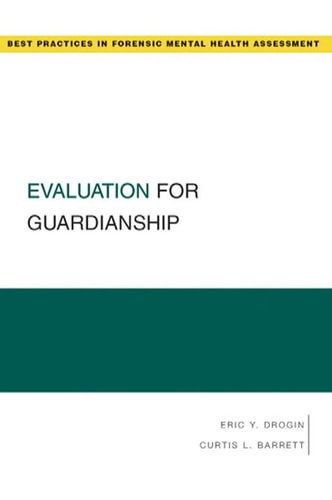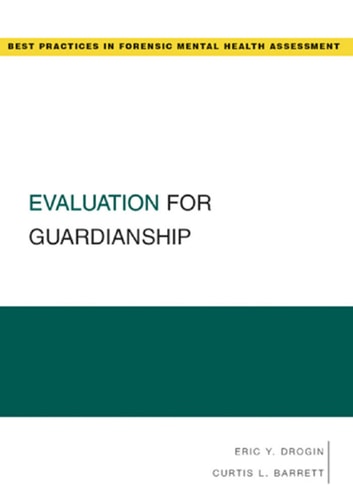
Evaluation for Guardianship: Best Practices for Forensic Mental Health Assessments
0
0
As an Amazon Associate and affiliate partner, Menrva Books earns from qualifying purchases. Learn more
Author Description
Forensic mental health assessment (FMHA) has grown into a specialization informed by research and professional guidelines. This series presents up-to-date information on the most important and frequently conducted forms of FMHA. The 19 topical volumes address best approaches to practice for particular types of evaluation in the criminal, civil, and juvenile/family areas. Each volume contains a thorough discussion of the relevant legal and psychological concepts, followed by a step-by-step description of the assessment process from preparing for the evaluation to writing the report and testifying in court.Volumes include the following helpful features:Boxes that zero in on important information for use in evaluationsTips for best practice and cautions against common pitfallsHighlighting of relevant case law and statutesSeparate list of assessment tools for easy referenceHelpful glossary of key terms for the particular topicIn making recommendations for best practice, authors consider empirical support, legal relevance, and consistency with ethical and professional standards. These volumes offer invaluable guidance for anyone involved in conducting or using forensic evaluations.This book considers those legal, ethical and assessment issues that arise when forensic mental health professionals are asked to evaluate the capacity of adults to make independent decisions about the management of their personal and financial affairs. As our population ages, the competence of those who are elderly and mentally infirmed may be challenged more and more frequently, and this book will be an invaluable resource for those involved in assessing that competence.
Menrva's Summary
THE THESIS
How can forensic mental health professionals accurately and ethically assess an adult's capacity to manage personal and financial affairs? Authors Curtis L. Barrett and Eric Y. Drogin synthesize legal requirements and psychological assessment standards to provide a framework for guardianship evaluations. They address the increasing demand for these assessments within an aging population, emphasizing the intersection of clinical competence and legal decision-making. The text serves as a procedural guide for navigating the complexities of mental infirmity and individual autonomy.
THE SCOPE MAP
What You Will Find
- Legal and ethical frameworks for determining adult competency
- Step-by-step protocols for conducting guardianship evaluations
- Guidance on report writing and courtroom testimony
- Summaries of relevant case law and statutory requirements
Scope Limits
- Does not cover evaluations for criminal responsibility or juvenile delinquency
- Does not provide a universal diagnostic manual, focusing specifically on guardianship capacity
THE AUTHORITY PERSPECTIVE
Experts recognize this volume as a standard reference for practitioners navigating the intersection of clinical psychology and probate law. Readers frequently note the practical utility of the included best-practice tips and the clarity with which the authors bridge complex legal concepts with psychological assessment tools.
Page Count:
172
Publication Date:
2010-01-01
Publisher:
Oxford University Press
ISBN-10:
0190295872
ISBN-13:
9780190295875
Psychology
Law
Professional Reference
Mental Health
Forensic Psychology
Gerontology
Community Tags
Similar Books