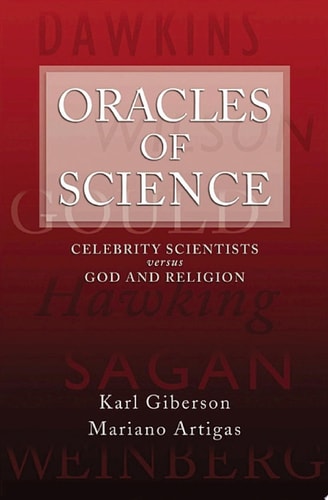
Oracles of Science: Celebrity Scientists Versus God and Religion
0
0
As an Amazon Associate and affiliate partner, Menrva Books earns from qualifying purchases. Learn more
Author Description
Oracles of Science examines the popular writings of the six scientists who have been the most influential in shaping our perception of science, how it works, and how it relates to other fields of human endeavor, especially religion. Biologists Stephen Jay Gould, Richard Dawkins, and Edward O. Wilson, and physicists Carl Sagan, Stephen Hawking, and Steven Weinberg, have become public intellectuals, articulating a much larger vision for science and what role it should play in the modern worldview. The scientific prestige and literary eloquence of each of these great thinkers combine to transform them into what can only be called oracles of science. Their controversial, often personal, sometimes idiosyncratic opinions become widely known and perceived by many to be authoritative. Curiously, the leading 'oracles of science' are predominantly secular in ways that don't reflect the distribution of religious beliefs within the scientific community. Many of them are even hostile to religion, creating a false impression that science as a whole is incompatible with religion. Karl Giberson and Mariano Artigas offer an informed analysis of the views of these six scientists, carefully distinguishing science from philosophy and religion in the writings of the oracles. This book will be welcomed by many who are disturbed by the tone of the public discourse on the relationship between science and religion and will challenge others to reexamine their own preconceptions about this crucial topic.
Menrva's Summary
THE THESIS
This book investigates the influence of six prominent scientists whose public writings have shaped the modern perception of the relationship between science and religion. Authors Karl Giberson and Mariano Artigas, both scholars in the intersection of science and faith, analyze how these figures transitioned from researchers to public intellectuals. They argue that the secular, often anti-religious, stances of these specific scientists create a skewed public impression that science is inherently incompatible with religious belief.
THE SCOPE MAP
What You Will Find
- Comparative analysis of the writings of Stephen Jay Gould, Richard Dawkins, Edward O. Wilson, Carl Sagan, Stephen Hawking, and Steven Weinberg.
- A framework for distinguishing between empirical scientific findings and the philosophical or personal opinions of scientists.
- Examination of the sociological phenomenon of the 'oracle' figure in modern intellectual discourse.
Scope Limits
- The book does not provide a comprehensive history of all scientific perspectives on religion.
- It does not attempt to resolve the theological debates themselves but focuses on the rhetoric of the selected scientists.
THE AUTHORITY PERSPECTIVE
Critics and readers note that the text provides a balanced critique of the rhetorical strategies employed by these high-profile scientists. Scholars often cite this work as a useful resource for understanding the distinction between scientific methodology and the personal worldviews of public intellectuals.
Page Count:
284
Publication Date:
2006-01-01
Publisher:
Oxford University Press
ISBN-10:
0190295082
ISBN-13:
9780190295080
Philosophy
Science
Religion
Intellectual History
Philosophy of
Sociology of Science
Community Tags
Other Editions(2)

Similar Books