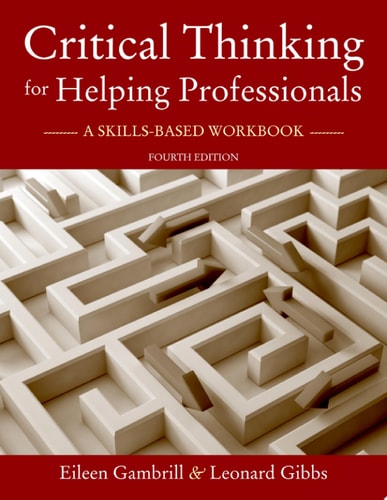
Critical Thinking for Helping Professionals
0
0
As an Amazon Associate and affiliate partner, Menrva Books earns from qualifying purchases. Learn more
Author Description
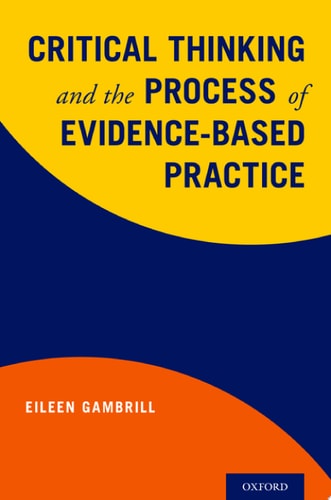
Critical Thinking Values, Skills, And Knowledge Are Integral To Evidence-based Practice In The Helping Professions. Inflated Claims Of Knowledge, Both In The Media As Well As In The Peer-reviewed Literature, Show Critical Thinking To Be Ever More Important To Decrease The Influence Of Marketing In The Guise Of Scholarship. Practitioners Must Be Able And Willing To Think Critically About Decisions That Affect Clients' Lives. This Requires Minimizing The Influence Of Cognitive And Affective Biases, Such As Hindsight Bias, And Avoiding Misleading Framing Of Problems That May Harm Clients But Contribute To The Profit Of Involved Industries (e.g. Ignoring Environmental Sources Of Distress And Focusing On Client Characteristics). This Book Continues To Focus On Engaging Students As Active Participants In Exercises Designed To Hone Their Critical Thinking Skills, Drawing On Related Research And Theory In A Variety Of Related Areas, Including Judgement And Decision Making. Exercises Are Included To Help Students Enhance Their Skills In The Process Of Evidence-based Practice, Including Posing Clear, Relevant Questions And Locating And Critically Appraising Related Research. This Fourth Edition Of Critical Thinking For Helping Professionals Is For Students Of Helping Professions Including Social Work, Nursing, Counseling, And Psychology. Decision-making Skills Guided By An Ethical Compass Are Vital In All Helping Professions.
Menrva's Summary
THE THESIS
How can helping professionals cultivate the analytical rigor necessary to navigate complex clinical decisions while resisting the influence of cognitive biases and industry-driven misinformation? Authors Eileen Gambrill and Leonard Gibbs provide a structured framework for integrating critical thinking into evidence-based practice. Drawing upon research in judgment and decision-making, the text argues that practitioners must actively identify and mitigate cognitive and affective biases to protect client welfare. The authors emphasize the ethical imperative of questioning prevailing claims and evaluating research with skepticism to ensure that interventions are grounded in sound evidence rather than marketing or professional convenience.
THE SCOPE MAP
What You Will Find
- Methodologies for posing clear, relevant clinical questions.
- Strategies for locating and critically appraising peer-reviewed research.
- Exercises designed to identify and minimize cognitive biases like hindsight bias.
- Frameworks for evaluating the influence of industry interests on professional practice.
Scope Limits
- The text does not provide clinical diagnostic manuals or specific therapeutic techniques.
- It does not cover administrative or organizational management beyond the scope of individual decision-making.
THE AUTHORITY PERSPECTIVE
Experts and educators frequently cite this work as a foundational text for students in social work, nursing, and psychology who are learning to navigate the intersection of research and practice. Readers often note the academic density of the prose, which requires active engagement with the provided exercises to fully grasp the application of the theoretical concepts.
Page Count:
272
Publication Date:
2017-01-01
Publisher:
Oxford University Press
ISBN-10:
019029731X
ISBN-13:
9780190297312
Psychology
Counseling
Evidence-Based Practice
Professional Development
Nursing
Social Work
Critical thinking
Community Tags
Similar Books