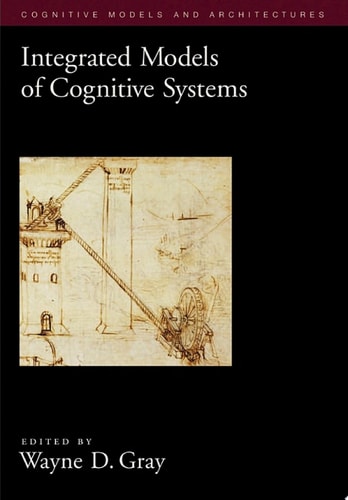
Integrated Models of Cognitive Systems
0
0
As an Amazon Associate and affiliate partner, Menrva Books earns from qualifying purchases. Learn more
Author Description
The field of cognitive modeling has progressed beyond modeling cognition in the context of simple laboratory tasks and begun to attack the problem of modeling it in more complex, realistic environments, such as those studied by researchers in the field of human factors. The problems that the cognitive modeling community is tackling focus on modeling certain problems of communication and control that arise when integrating with the external environment factors such as implicit and explicit knowledge, emotion, cognition, and the cognitive system. These problems must be solved in order to produce integrated cognitive models of moderately complex tasks. Architectures of cognition in these tasks focus on the control of a central system, which includes control of the central processor itself, initiation of functional processes, such as visual search and memory retrieval, and harvesting the results of these functional processes. Because the control of the central system is conceptually different from the internal control required by individual functional processes, a complete architecture of cognition must incorporate two types of theories of control: Type 1 theories of the structure, functionality, and operation of the controller, and type 2 theories of the internal control of functional processes, including how and what they communicate to the controller. This book presents the current state of the art for both types of theories, as well as contrasts among current approaches to human-performance models. It will be an important resource for professional and student researchers in cognitive science, cognitive-engineering, and human-factors.Contributors: Kevin A. Gluck, Jerry T. Ball, Michael A. Krusmark, Richard W. Pew, Chris R. Sims, Vladislav D. Veksler, John R. Anderson, Ron Sun, Nicholas L. Cassimatis, Randy J. Brou, Andrew D. Egerton, Stephanie M. Doane, Christopher W. Myers, Hansjörg Neth, Jeremy M Wolfe, Marc Pomplun, Ronald A. Rensink, Hansjörg Neth, Chris R. Sims,
Menrva's Summary
THE THESIS
This book investigates the theoretical and practical challenges of developing integrated cognitive models capable of functioning within complex, realistic environments rather than isolated laboratory settings. Wayne D. Gray compiles contributions from leading researchers to address the dual-control problem in cognitive architectures. The text argues that a complete system requires both Type 1 theories, which govern the central controller, and Type 2 theories, which manage the internal operations of functional processes like memory retrieval and visual search.
THE SCOPE MAP
What You Will Find
- Comparative analysis of current cognitive architectures and human-performance models
- Theoretical frameworks for central system control and functional process initiation
- Examination of communication protocols between cognitive controllers and external environmental factors
Scope Limits
- The text focuses primarily on moderately complex tasks rather than fully autonomous general intelligence
- It does not provide a single unified model but rather a survey of competing state-of-the-art approaches
THE AUTHORITY PERSPECTIVE
Experts identify this volume as a foundational reference for researchers and students working in cognitive engineering and human factors. Readers frequently note the academic density of the prose, which assumes a high level of prior knowledge in cognitive science and computational modeling.
Page Count:
470
Publication Date:
2007-01-01
Publisher:
Oxford University Press
ISBN-10:
019029339X
ISBN-13:
9780190293390
Psychology
Human Factors
Community Tags
Other Editions(3)

Similar Books










Reader Comments
Share Your Thoughts
No comments yet. Be the first to share your thoughts!