Human Factors in Healthcare: Level One
0
0
As an Amazon Associate and affiliate partner, Menrva Books earns from qualifying purchases. Learn more
Author Description
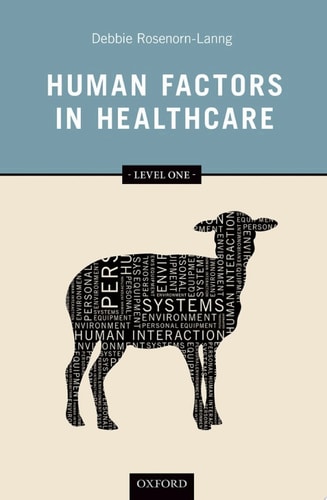
The majority of errors, litigation, and complaints in the health service are due to 'human factors', yet the term is still not widely understood and is sometimes used interchangeably to refer to team training or communication skills. Although including these, the subject of 'human factors' goes far beyond this to look at systems, environmental influences, and interactions with equipment, in addition to self-awareness and human interaction. All of these aspects are captured in Human Factors in Healthcare and are built into a new framework: the SHEEP model, which breaks down into five key areas: Systems, Human Interaction, Environment, Equipment, and Personal, providing a structured way to focus on adopting 'safety positive' behaviours. Written in a clear and engaging way, the book is ideal for clinicians and non-clinicians alike. Through the use of relevant real world healthcare examples and exercises the book encourages interaction and thinking, as well as illustrating how mistakes can be avoided. The book also sets out ways on how to improve the experience of patients and staff across healthcare, in particular focusing on how to improve patient safety. In light of regular news reports about patient care, Human Factors in Healthcare presents a timely and proactive approach to these issues and is essential reading for doctors, nurses, managers, and everyone working in the healthcare profession.
Menrva's Summary
THE THESIS
This book investigates how the systematic application of human factors principles can reduce medical errors, litigation, and patient complaints within healthcare environments. Author Debbie Rosenorn-Lanng presents the SHEEP model—a structured framework encompassing Systems, Human Interaction, Environment, Equipment, and Personal factors—to help clinicians and staff cultivate safety-positive behaviors. By moving beyond simple communication training, the text provides a comprehensive methodology for analyzing the complex interactions between healthcare workers and their operational environments.
THE SCOPE MAP
What You Will Find
- The SHEEP model framework for analyzing healthcare safety
- Practical exercises for identifying and mitigating systemic risks
- Real-world case studies illustrating common error patterns
- Strategies for improving staff and patient experiences
Scope Limits
- Does not provide clinical medical training or diagnostic procedures
- Does not cover legal defense strategies for malpractice litigation
THE AUTHORITY PERSPECTIVE
Readers frequently note the accessibility of the prose, which makes complex systems-engineering concepts understandable for both clinical and non-clinical staff. Experts highlight this as a practical, foundational text for healthcare professionals seeking to implement proactive safety protocols in their daily practice.
Page Count:
240
Publication Date:
2014-01-01
Publisher:
OUP Oxford
ISBN-10:
0191649562
ISBN-13:
9780191649561
Family Practice
Medical
Prevention
Education & Training
Health & Fitness
MEDICAL Osteopathy
Safety measures
Human Factors
Patient Safety
Professional Development
MEDICAL Holistic Medicine
Patients
Allied Health
MEDICAL Essays
Medical Errors